
There are two children at home, one rainy afternoon, and no one else to play with. The board games on the shelf all say “3 to 6 players”. The video games need a subscription. The children are bored, and the parent is out of ideas. Two player games for kids at home solve exactly this problem. They are games built for two: two siblings, two friends, or a child and a parent. No group needed, no waiting for more players, no one sitting out.
This guide has twenty-five of them, and they cover every kind of play: board games, card games, paper games, and outdoor games. Some need a board or a deck of cards. Some need nothing but a pencil. All of them work with exactly two players, and all of them have been chosen because they stay fun when it is just the two of you. Whether it is a quiet evening, a long car journey, or a whole rainy weekend, two players are enough.
Why Two Player Games Matter
Most children’s games assume a group. That is fine at school, where there are thirty children in a room. At home, it is a different story. Many families have two children, or one child and one parent, and the games that need four players sit unplayed on the shelf. A two-player game is not a lesser version of a group game. It is a different kind of game, and it has its own strengths.
Two-player games are faster. There is no waiting for four turns to come around. Every move matters, because there is only one opponent. Children learn to think ahead, to watch what the other player is doing, and to cope with losing, because in a two-player game someone loses every time. That is a useful lesson, and it comes wrapped in fun.
Two-player games also build relationships. A game between two siblings is a shared experience that belongs to just the two of them. A game between a child and a parent is undivided attention, which is the thing children want most. The game gives them a reason to sit together, talk, laugh, and compete, without a screen between them.
25 Two Player Games for Kids at Home
Here are twenty-five games for exactly two players, grouped by type. Board games need a board or a set. Card games need a deck. Paper games need a pencil. Outdoor games need a garden, a park, or a driveway. Pick the group that fits the moment.
Board and Tabletop Games
1. Chess. The classic two-player game. Children can learn the moves in an afternoon and spend years getting better. Start with just the pawns and the king, then add one piece at a time. Best for ages 7 and up, thirty minutes.
2. Checkers. Simpler than chess and faster to learn. Pieces move diagonally, jump over each other, and the first to capture all the opponent’s pieces wins. It is the best first strategy game for younger children. Best for ages 5 and up, twenty minutes.
3. Connect Four. Drop coloured discs into a grid and get four in a row. It takes two minutes to learn and ten minutes to play, and children love the clatter of the discs. Best for ages 4 and up, ten minutes.
4. Snakes and Ladders. Roll the dice, climb the ladders, slide down the snakes. It is pure luck, which means a younger child can beat an older one, and that is exactly why children love it. Best for ages 4 and up, twenty minutes.
5. Dominoes. Match the dots, use up your tiles first, and win. Dominoes teaches counting, matching, and planning, and it works for ages four to adult. Best for ages 4 and up, fifteen minutes.
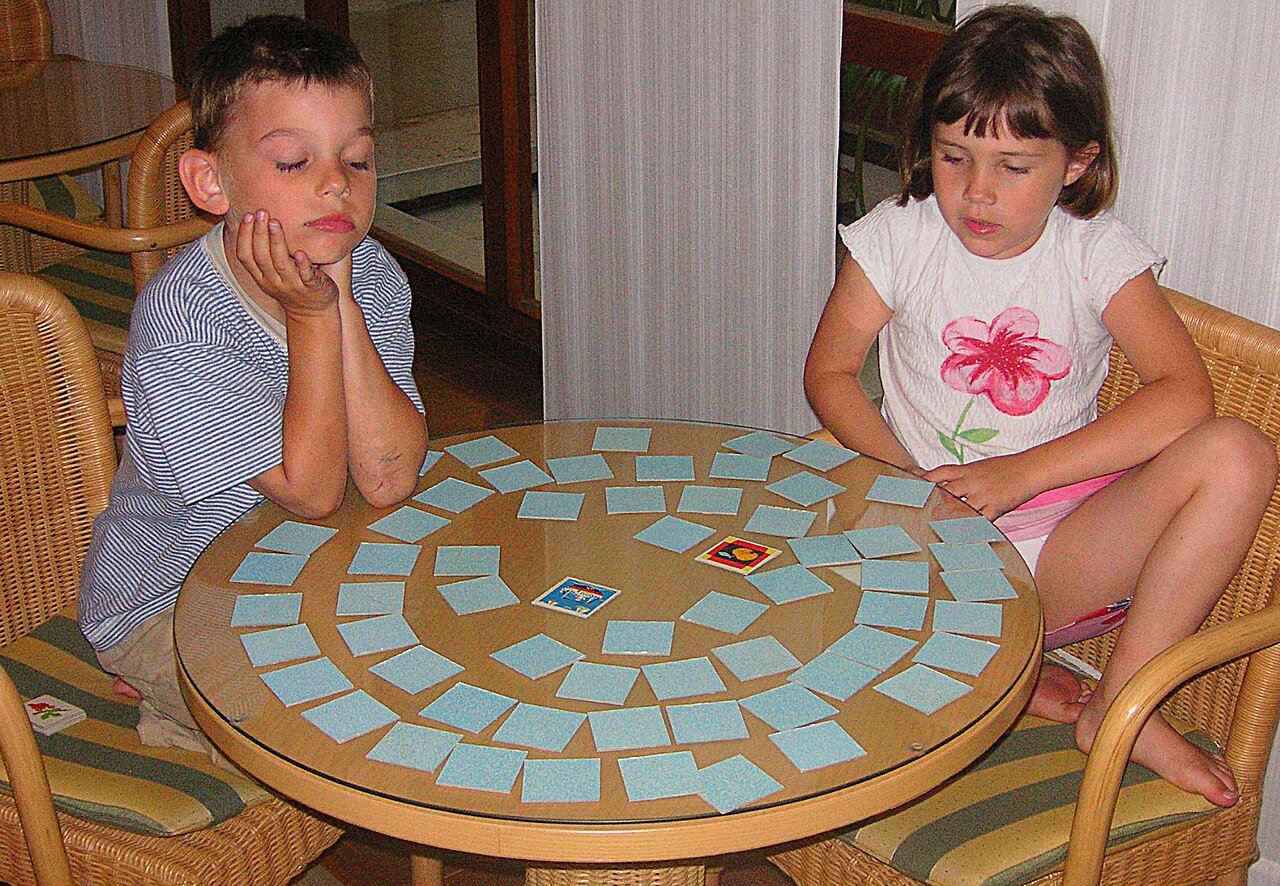
6. Memory Matching. Lay cards face down in a grid. Turn over two cards and try to find a matching pair. The player with the most pairs wins. You can play with a bought set or make your own from any matching pictures. Best for ages 4 and up, fifteen minutes.
7. Battleships. Each player hides ships on a grid and calls out coordinates to find the other’s fleet. It needs the game set or two pieces of paper with a grid drawn on them. It teaches coordinates, logic, and patience. Best for ages 7 and up, twenty minutes.
Card Games for Two
8. Go Fish. Ask your opponent for a card: “Do you have any threes?” If they do, they hand them over. If not, “go fish” and draw from the pile. The first to collect all their sets wins. It is the best first card game for young children. Best for ages 4 and up, fifteen minutes.
9. Snap. Deal the cards face down. Players take turns flipping a card. When two matching cards appear, the first to shout “snap” wins the pile. It is fast, loud, and it teaches quick reactions. Best for ages 5 and up, ten minutes.
10. War. Each player flips a card at the same time. The higher card wins both. If the cards match, it is war: each player lays down three cards face down and one face up, and the higher card takes everything. It needs no skill, which makes it perfect for younger children. Best for ages 4 and up, fifteen minutes.
11. Uno. Match a card by colour or number, use action cards to skip or reverse, and shout “Uno” when you have one card left. It is the most popular card game in the world for a reason: it is simple, it is fast, and it is dramatic. Best for ages 6 and up, twenty minutes.
12. Rummy. Collect sets of three or four matching cards, or runs of the same suit. It is a thinking game, and it suits older children who like strategy. Start with a simple version: first to three sets wins. Best for ages 8 and up, thirty minutes.
Paper and Pencil Games
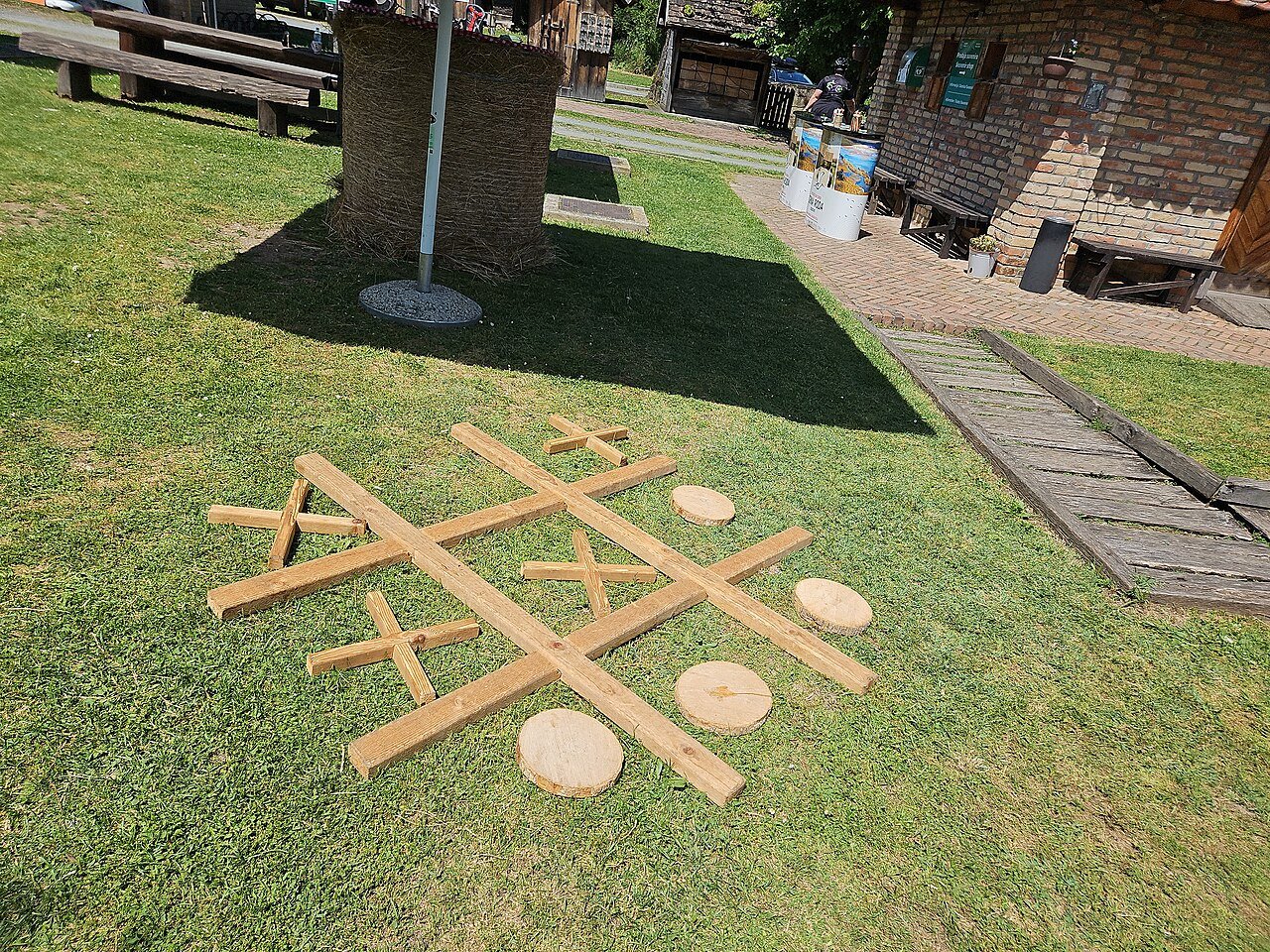
13. Tic-Tac-Toe. Draw a three-by-three grid. One player is crosses, one is noughts. Get three in a row to win. It is the first game most children ever learn, and it never gets old. Teach older children the strategy: take the centre, block the corners, and never let your opponent have two in a row. Best for ages 4 and up, five minutes.
14. Hangman. One player thinks of a word and draws dashes for each letter. The other guesses letters, one at a time. A correct letter fills in the dashes. A wrong letter adds a part to the hanging man. It is a spelling game disguised as a guessing game. Best for ages 6 and up, ten minutes.
15. Dots and Boxes. Draw a grid of dots. Players take turns drawing a line between two dots. When a player completes a box, they write their initial in it and go again. The player with the most boxes wins. It is quiet, strategic, and surprisingly tense. Best for ages 6 and up, fifteen minutes.
16. Battleships on Paper. Each player draws two ten-by-ten grids on paper: one for their own ships, one for tracking shots. Call out coordinates like “B7” and mark hits and misses. It is the same game as the board version, but it costs nothing. Best for ages 7 and up, twenty minutes.
17. Word Search Race. Each player writes a list of ten words, then hides them in a letter grid for the other to find. The first to find all ten wins. Making the puzzle is half the game. Best for ages 8 and up, twenty minutes.
18. The Drawing Game. One player draws a picture in sixty seconds, and the other has to guess what it is. Then swap. Keep score across ten rounds. The worse the drawing, the funnier the game. Best for ages 5 and up, fifteen minutes.
Active and Outdoor Games for Two
19. Catch. Throw a ball back and forth. Add a rule each round: clap before you catch, catch with one hand, catch behind your back. It is the simplest outdoor game, and it never fails. Best for ages 3 and up, ten minutes.
20. Hide and Seek for Two. One player hides, the other counts to twenty and searches. It works in a house, a garden, or a park, as long as the boundaries are agreed first. The hider gets creative, the seeker gets faster, and the game resets itself every round. Best for ages 4 and up, fifteen minutes.
21. Tag Variations. One player is “it” and chases the other. Add a twist: freeze tag, where the tagged player freezes until freed, or shadow tag, where you tag the other player’s shadow instead of their body. It is pure energy, and it works in any open space. Best for ages 5 and up, fifteen minutes.
22. Hopscotch. Draw the grid with chalk, throw a stone, and hop through the squares. It is a solo game that becomes a two-player competition when you race or take turns. Best for ages 4 and up, fifteen minutes.
23. Badminton. A shuttlecock, two rackets, and a garden. Keep the rally going as long as possible, and count the longest rally. It is the best two-player outdoor game for older children, because it is fast, skillful, and endlessly repeatable. Best for ages 7 and up, thirty minutes.
24. Kick the Can. Place a can in the middle of the garden. One player guards it, the other hides. When the seeker finds the hider, the hider runs to kick the can before being tagged. It is hide and seek with a finish line, and it turns a small garden into a whole world. Best for ages 6 and up, twenty minutes.
25. Quiz Duel. One player asks the other a question. If they answer correctly, they ask the next one. If not, the asker gets a point. Use questions from school, from books, or from the world around you. For a ready-made quiz, open a game on the official Baamboozle website and play it together: one player picks a tile, the other answers, and you swap roles each round. The how to play Baamboozle guide explains the setup in two minutes, and it turns any quiz into a two-player duel.
Two Player Games by Age
Ages 4 to 6. Stick to luck and simple rules: Snakes and Ladders, Connect Four, Go Fish, War, Tic-Tac-Toe, Catch, and Hide and Seek. Games should last ten to fifteen minutes. The child should win sometimes, so choose games where luck matters as much as skill.
Ages 7 to 9. Add strategy: Chess, Checkers, Battleships, Hangman, Dots and Boxes, and Uno. Children this age can handle rules, planning, and losing gracefully most of the time. Games can last twenty to thirty minutes.
Ages 10 to 12. Use the full list, including Rummy, Badminton, and Quiz Duel. Older children enjoy games with real depth, and they can play chess properly. Let them teach the younger player sometimes: teaching a game is a game in itself.
How to Keep Two Player Games Fair
The hardest part of two-player games is the age gap. A ten-year-old playing chess against a five-year-old is not a game, it is a lesson in losing. Fix it with handicaps. The older player starts with fewer pieces, or the younger player gets an extra move, or the older player has to win twice to take the match. A fair game is a fun game, and a game that is always won by the same player stops being played.
Losing matters too. In a two-player game, someone loses every time, and children need to learn to cope with that. The rule is simple: the loser chooses the next game. It gives the loser something to look forward to, and it stops the winner from gloating. Shake hands at the end, every time, win or lose. It is a small ritual, but it teaches more than any lecture about sportsmanship.
Take turns choosing the game. If one player always picks, the other stops caring. Alternate: you choose this game, I choose the next one. And keep a running score across the day, not just one game. A child who loses at chess can win at snap, and the day’s champion is the one who wins the most games, not the one who wins the best game.
Frequently Asked Questions
What is the best two player game for kids?
It depends on the age. For ages four to six, Connect Four is the best: it takes two minutes to learn and it is over in ten. For ages seven to nine, Uno is the best: it is fast, funny, and dramatic. For ages ten and up, chess is the best: it has endless depth and it never gets boring. If you can only buy one game, buy a deck of cards: Go Fish, Snap, War, and Rummy all come from the same pack.
Can two player games work for siblings with a big age gap?
Yes, with handicaps. Give the younger child an advantage: extra moves in chess, a head start in a race, or a simpler version of the rules. Choose luck-based games, like Snakes and Ladders or War, where the younger child can win fairly. And let the older child teach the younger one sometimes: teaching is a game in itself, and it builds the relationship as much as playing does.
Do two player games need special equipment?
Most do not. Paper games need a pencil. Card games need a deck. Board games need a board, but many of them, like Battleships and Dots and Boxes, work on paper too. The only games that need equipment are the outdoor ones, and even those need nothing more than a ball or a piece of chalk.
How long should a two player game last?
Ten to thirty minutes is right for most children. Shorter than ten minutes feels rushed. Longer than thirty minutes loses a young child’s attention. If a game is going well, play best of three instead of one long game. Three short games feel like more fun than one long one, and the score stays close.