
Third grade is a wonderful age for classroom games. Eight and nine year olds can follow rules, work in teams, read instructions and think strategically, but they still get genuinely excited about a quiz, a race or a mystery. They are old enough for games with real thinking in them, and young enough to throw themselves into a game without worrying about looking cool. That combination makes third grade the best year for classroom games, if you choose the right ones.
The games in this guide all work with real third grade classes. Each one includes the rules, the group size, the time it takes and what children actually learn from it, so you can pick the right game for the right moment. Some are quick five minute warm ups, some fill a whole lesson, and some are perfect for the last ten minutes on a Friday. Mix them across the week, and your class will start asking for game time before you even suggest it.
What Makes a Good Game for Third Graders?
A good third grade game has three qualities. First, it has a clear goal that children can understand in thirty seconds. If the rules take five minutes to explain, the game is too complicated. Second, it lets every child take part. Games where one confident child answers everything while the rest watch are not games, they are performances. Third, it teaches something without feeling like a lesson.
Third graders also need games that respect their growing independence. They like making choices, solving problems and competing fairly. They dislike games that feel babyish, and they dislike games where the teacher decides everything. Give them roles, let them make decisions, and let them argue about the rules sometimes. That argument is part of the learning.
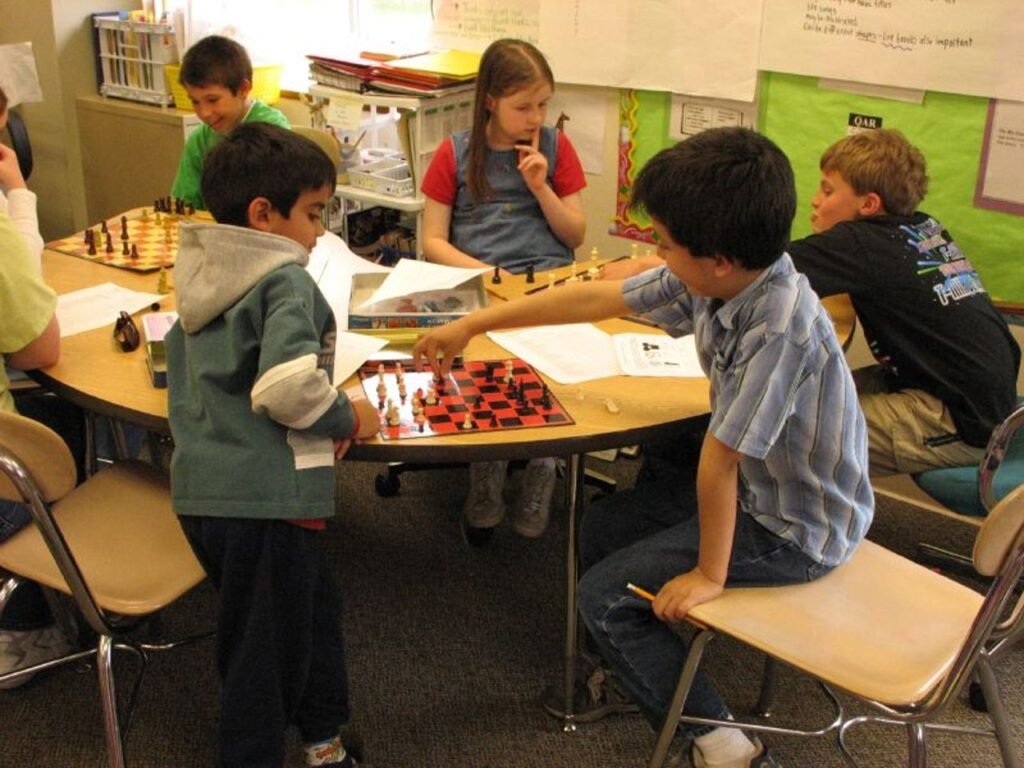
Word and Reading Games
1. Baamboozle Quiz Show
Build a quiz on Baamboozle with questions from the week’s lessons, split the class into teams, and let them take turns choosing squares. A ten question quiz takes about fifteen minutes and works for any subject. If you have never built a game before, the guide to how to play Baamboozle explains the setup in a few simple steps. Best for the whole class, fifteen minutes, any subject.
2. Word Chain
One child says a word, and the next child must say a word that starts with the last letter of the previous word. Cat leads to tiger, tiger leads to rabbit, rabbit leads to turtle. Play it as a whole class circle, or in small groups with a timer. Children who cannot think of a word in five seconds are out, and the last child standing wins. Best for five to ten minutes, whole class or small groups.
3. Story Starter Relay
Write the first sentence of a story on the board, such as “On Tuesday morning, Maya found a key that did not fit any door in her house.” Each team must add one sentence, taking turns, until the story has ten sentences. The team with the most interesting, funniest or most surprising story wins, and the class votes on the winner. Best for twenty minutes, teams of four to six.
4. Vocabulary Pictionary
Write vocabulary words from the week’s lessons on slips of paper. One child draws a word while their team guesses what it is, with a one minute time limit. No letters or numbers are allowed in the drawing, and no talking from the artist. Best for fifteen minutes, teams of four to six.
5. Synonym Snap
Give each child a card with a word on it. When you call out a word, children must find the classmate holding a synonym, a word with a similar meaning, and pair up with them. The first correct pair wins a point. Best for ten minutes, whole class.
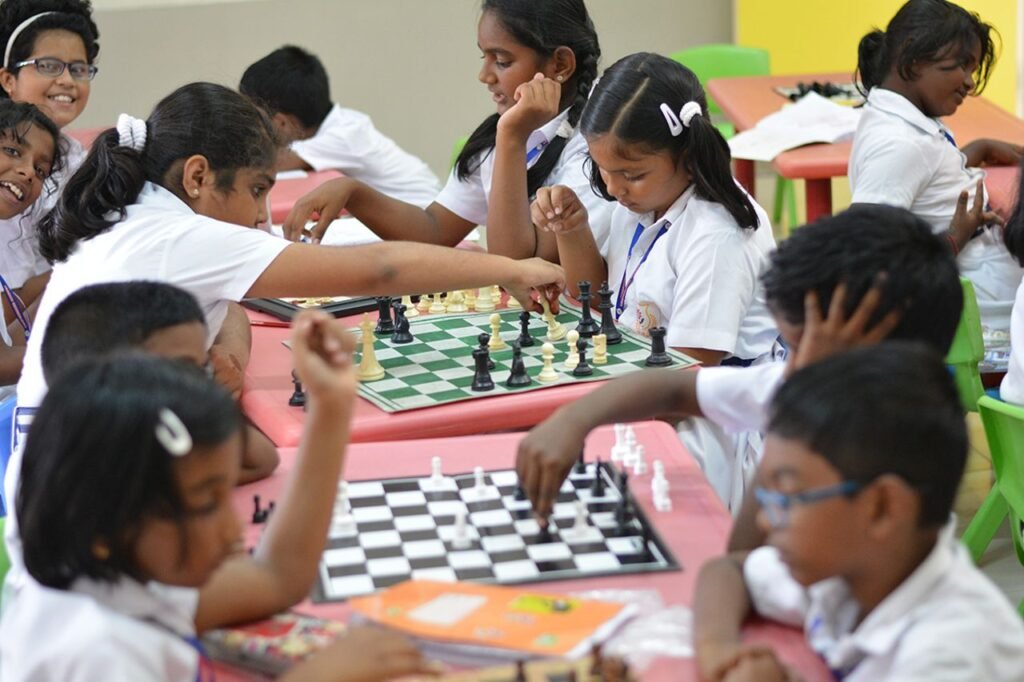
Maths Games
6. Times Table Bingo
Give each child a bingo grid with answers to multiplication questions, such as 12, 24, 36 and 48. Call out questions like six times four, and children cross off the answer if they have it. The first to complete a row wins. Best for ten minutes, whole class.
7. Number Detective
Think of a number between one and one hundred, and let the class ask yes or no questions to find it. Is it even? Is it bigger than fifty? Is it a multiple of three? Best for ten minutes, whole class.
8. Fraction Pizza
Draw a large circle on the board and divide it into slices. Call out a fraction, such as one half or three quarters, and a child must shade the right number of slices. Then ask the class to name the fraction that is left unshaded. Best for fifteen minutes, whole class or small groups.
9. Maths Relay Race
Write a multiplication or addition question on the board. The first child in each team runs up, writes the answer, and runs back to tag the next child. The team that answers the most questions correctly in five minutes wins. The running makes it exciting, and the time pressure makes children practise their number facts quickly. Best for ten minutes, teams of four to six.
10. Estimation Jar
Fill a jar with small objects, such as buttons, beads or dried pasta, and ask the class to estimate how many there are. Let children discuss their guesses in pairs, then collect the estimates and count the real total together. The child closest to the real number wins. Best for fifteen minutes, whole class.
Thinking and Logic Games
11. Twenty Questions
Think of an animal, a person or an object, and let the class ask up to twenty yes or no questions to work out what it is. Children must plan their questions carefully, because twenty questions run out quickly if they waste them on guesses. Best for ten to fifteen minutes, whole class.
12. Odd One Out
Show the class four words, pictures or numbers, and ask them to find the odd one out and explain why. The trick is that there is often more than one right answer. In the set dog, cat, fish and bird, the odd one out might be fish because it lives in water, or bird because it can fly. Best for ten minutes, whole class or pairs.
13. Memory Tray
Put ten small objects on a tray, show it to the class for thirty seconds, then cover it. Children must write down as many objects as they can remember. The child who remembers the most wins, and you can increase the difficulty by adding more objects or reducing the viewing time. Best for ten minutes, whole class or individuals.
14. Would You Rather Debate
Ask the class a question like “Would you rather be able to fly or be invisible?” and let children choose a side, then argue for it. Give each side one minute to make its case, and let the class vote on the most convincing argument. Best for fifteen minutes, whole class.
15. Logic Grid Race
Give pairs of children a simple logic puzzle, such as working out which child owns which pet from a set of clues. The first pair to solve it correctly wins. Start with puzzles that have three clues and build up to harder ones. Best for fifteen minutes, pairs.
Active Games
16. Four Corners
Label the four corners of the classroom with numbers one to four, or with answers to a question. Ask a question, such as “What is seven times eight?” and let children run to the corner with the right answer. Children in the wrong corner sit down, and the game continues until one child is left. Best for ten minutes, whole class.
17. Classroom Scavenger Hunt
Give each team a list of things to find in the classroom, such as something red, something with four sides, a word with a silent letter, or a book by a particular author. The first team to find everything on the list wins. Best for fifteen to twenty minutes, teams of three to four.
18. Human Bingo
Give each child a bingo grid with statements like “has a pet dog”, “can speak another language”, “has been to the beach” and “loves pizza”. Children must walk around the room, talk to their classmates, and find someone who matches each statement. The first to complete a row wins. Best for fifteen minutes, whole class.
19. Simon Says Challenge
Play the classic game, but add a twist for third graders: Simon’s instructions must include a learning task. “Simon says touch something that is a rectangle” or “Simon says spell the word because” or “Simon says show me seven fingers”. Children who follow an instruction that Simon did not say are out. Best for five minutes, whole class.
20. Ball Toss Quiz
Stand in a circle with a soft ball. Toss the ball to a child and ask a question. If they answer correctly, they toss the ball to someone else and ask the next question. If they get it wrong, they sit down. The game continues until one child is left standing. Best for ten minutes, whole class.
Quiet and Wind Down Games
21. Silent Ball
Children stand in a circle and pass a soft ball to each other without speaking. Anyone who talks, drops the ball or throws it too hard sits down. The game ends when one child is left, or when the time runs out. Best for ten minutes, whole class.
22. Draw and Guess
One child draws a word on the board while the class guesses what it is. The child who guesses correctly takes the next turn. Use words from the week’s lessons to sneak in some revision, or let children choose their own words for a purely fun round. Best for ten minutes, whole class.
23. Alphabet Game
Choose a topic, such as animals, food or countries, and go around the class naming something in that topic for each letter of the alphabet. A for alligator, B for bear, C for crocodile, and so on. Children who cannot think of a word in five seconds are out. Best for ten minutes, whole class.
24. Story Circle
Start a story with one sentence, and let each child add one sentence as the turn passes around the circle. The story must make sense, which means children have to listen carefully to what has already been said. Best for fifteen minutes, whole class.
25. Puzzle Race
Give pairs of children a puzzle to solve, such as a word search, a crossword, a sudoku for kids, or a tangram challenge. The first pair to finish correctly wins. Best for fifteen minutes, pairs.
How to Fit Games Into Your Week
You do not need to play all twenty five games in one week. A good pattern is one active game a day as a brain break, one word or maths game as part of a lesson, and one quiet game at the end of the day.
Keep a list of the games your class loves and the ones that fall flat. Every class is different, and a game that works brilliantly with one group may not work with another. Ask the children which games they want to play again, and let them vote on Friday’s game.
Frequently Asked Questions
How many games should I play with my class each day?
Two or three short games a day is plenty for most third grade classes, adding up to about thirty minutes in total. One as a warm up, one inside a lesson, and one as a wind down works well. More than that, and games start to replace teaching time rather than support it.
What if my class gets too noisy during active games?
Set the noise rule before you start, and use a clear signal, such as a hand in the air or a countdown from five, to bring the class back to quiet. If a game gets too loud, pause it, remind the class of the rule, and restart. Most classes learn quickly that a quiet game is a game that continues.
Can these games work for mixed ability classes?
Yes. Most of the games in this guide work in mixed ability teams, where stronger children support their teammates. For games like the maths relay or the quiz show, keep the questions at a level every child can attempt, and let teams discuss answers before committing. That way every child contributes.
Do I need special materials for these games?
No. Almost every game here needs nothing more than a whiteboard, a ball, or a piece of paper. A few, like the estimation jar and the memory tray, need simple objects you will already have in the classroom. That is deliberate, because a game that needs an hour of preparation is a game you will never play.