
Whole class games are exciting, but small group games are where the real learning happens. In a group of two to six students, every child gets a turn, every child gets heard, and no one can hide at the back. Shy children speak up in a small group when they would never speak in front of thirty classmates. Struggling children get help from their teammates without the whole class watching. Confident children learn to listen, explain and lead, which are skills that matter far more than winning a quiz.
This guide gives you twenty games designed for groups of two to six students. Each one includes the rules, the ideal group size, the time it takes and what children learn from it. Some need no materials at all, some need a set of cards or a whiteboard, and all of them can be played at a table while the rest of the class works on something else. Use them for group work, for intervention sessions, for early finishers, or for a rainy day when the whole class needs to split into teams.
Why Small Group Games Work So Well
The biggest advantage of a small group is turns. In a whole class game, a child might answer one question in fifteen minutes. In a group of four, the same child answers a question every minute. That difference adds up fast, and it is why small group games are so effective for practice.
Small groups also change the social dynamics. Children who are quiet in a large group often become leaders in a small one. Children who dominate a large group have to share the space in a small one. That is good for both of them. A small group is also a safer place to make a mistake, because only three or four classmates see it, and teammates can help put it right before anyone else notices.
The ideal group size is three or four. Two works well for paired games, but it loses the team discussion that makes small group games special. Five or six can work, but you need to make sure everyone still gets a turn, which means choosing games with fast rounds and short turns. Groups larger than six stop being small groups and start being small classes, with all the same problems.
How to Organise Small Groups That Actually Work
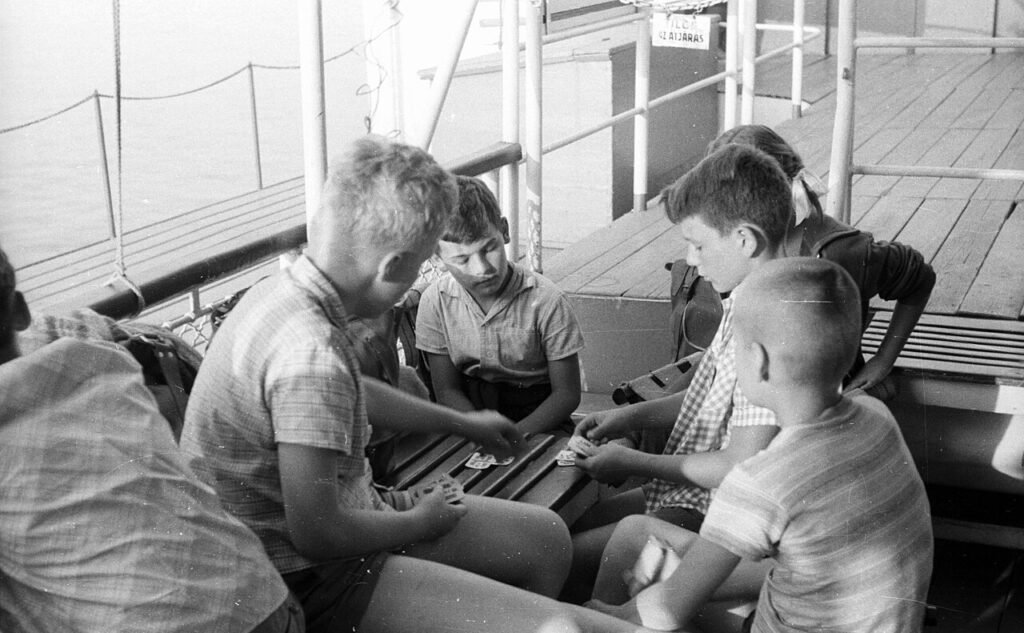
Before you start, decide how the groups are formed. Mixed ability groups work best for most games, because stronger children can support their teammates and everyone gets a turn at answering. Friendship groups work well for creative games, where children need to feel comfortable sharing ideas.
Give each group a clear job. One child can be the reader, who reads the questions aloud. One can be the writer, who records the answers. One can be the timekeeper, who watches the clock. One can be the checker, who makes sure everyone agrees before the group answers.
Set a time limit and stick to it. Most small group games work best in ten to fifteen minutes. Longer than that, and the group loses focus or finishes early and starts chatting. Shorter than that, and the game feels rushed.
Teachers who want to build their own group games on a screen will find the guide to how to create a Baamboozle game useful, because a Baamboozle game can be played by one small group at a time on a shared tablet or laptop. You can find the game itself on the official Baamboozle site.
Word and Language Games for Small Groups
1. Word Builder Race
Give each group a set of letter cards. Call out a word, and the group must race to build it from their cards. The first group to build the word correctly and read it aloud wins a point. Best for two to four players, ten minutes.
2. Story Chain
One child starts a story with a sentence, and each child in the group adds a sentence in turn. The story must make sense, which means children have to listen carefully to what has already been said. After five rounds, the group reads its story aloud to the class. Best for three to six players, fifteen minutes.
3. Vocabulary Card Match
Give each group a set of cards with words on some and definitions on others. The group must match each word to its definition, and the first group to match them all correctly wins. Best for two to four players, ten minutes.
4. Spelling Showdown
One child is the caller and reads out a word from the group’s spelling list. The other children write the word on their whiteboards and hold them up at the same time. Everyone who spells it correctly scores a point, and the caller changes each round. Best for two to six players, ten minutes.
5. Rhyme Challenge
Give the group a word, such as cat, and challenge them to think of as many rhyming words as they can in two minutes. Real words score one point each, and the group with the most words wins. This game builds phonemic awareness and vocabulary, and it works well with younger children as well as older ones. Best for two to five players, ten minutes.
Maths and Logic Games for Small Groups
6. Number Bingo
Give each child in the group a bingo grid with numbers on it. One child calls out a maths question, such as six times four or twenty five plus seventeen, and the others cross off the answer if they have it. The caller changes each round, so every child practises both asking and answering questions. Best for three to five players, ten minutes.
7. Logic Puzzle Pairs
Give each pair a simple logic puzzle, such as working out which child owns which pet from a set of clues, or which house is which colour from a description. The pair must solve the puzzle together, talking through their reasoning as they go. Best for two players, fifteen minutes.
8. Estimation Challenge
Show the group a jar filled with small objects, or a picture of a crowd, and ask them to estimate how many there are. Each child writes down an estimate, then the group discusses the estimates and agrees on a single group answer. The group closest to the real number wins. Best for three to six players, ten minutes.
9. Maths Card Game
Give each group a set of number cards. Each child draws two cards, and the group must work out who has the largest total, the smallest total, or the total closest to a target number. Change the rule each round to keep it interesting: largest product, smallest difference, closest to fifty. Best for two to four players, ten minutes.
10. Pattern Detectives
Show the group a number pattern, such as 3, 6, 9, 12, and ask them to work out the rule and predict the next three numbers. Then let each group invent a pattern for another group to solve. Best for two to four players, fifteen minutes.
Creative Games for Small Groups
11. Picture Story
Give each group a picture, such as a photograph of a strange place or an illustration from a book. The group has five minutes to invent a story about the picture, and then one child tells the story to the class. Best for three to six players, fifteen minutes.
12. Build a World
Give each group a large piece of paper and ask them to draw a map of an imaginary island, complete with mountains, rivers, towns and a castle. Then ask them to name the places on the map and invent one interesting fact about each one. Best for three to five players, twenty minutes.
13. Role Play News Report
Give each group a headline, such as “A Dog Has Been Elected Mayor” or “It Rained Chocolate Yesterday”, and ask them to prepare a one minute news report about it. One child is the presenter, one is the reporter on the scene, and one is an eyewitness. The group performs the report for the class, and the class votes on the most convincing one. Best for three to four players, fifteen minutes.
14. Design Challenge
Give each group a design problem, such as building the tallest tower from paper, designing a bridge from straws, or inventing a new playground. The group has fifteen minutes to plan and build, and then presents its design to the class. Best for three to five players, twenty minutes.
15. Character Interview
One child pretends to be a character from a book the class has read, and the other children in the group interview them, asking questions about the character’s life, feelings and decisions. The interviewer must stay in character, and the group must ask questions that show they understand the book. Best for two to four players, fifteen minutes.
Active and Quiet Games for Small Groups
16. Memory Match
Put a set of cards face down on the table, with matching pairs hidden among them. Children take turns turning over two cards, and if they match, the child keeps the pair and goes again. The child with the most pairs at the end wins. Use picture cards for younger children, and word cards, such as synonyms or rhyming pairs, for older children. Best for two to four players, ten minutes.
17. Twenty Questions in a Group
One child thinks of an animal, a person or an object, and the rest of the group asks up to twenty yes or no questions to work out what it is. The group must plan its questions carefully, because twenty questions run out quickly if they waste them on guesses. Best for three to six players, ten minutes.
18. Quiet Ball Pass
Children sit in a circle and pass a soft ball to each other without speaking. Anyone who talks or drops the ball is out, and the last child remaining wins. This game teaches self control and focus, and it is perfect for calming a group down after a busy lesson. Best for three to six players, ten minutes.
19. Drawing Telephone
The first child draws a picture of a word, the second child looks at the picture and writes down what they think it is, the third child draws a picture of that word, and so on around the group. At the end, the group compares the first word with the last picture, and the results are usually hilarious. Best for four to six players, fifteen minutes.
20. Team Quiz
Give each group a set of quiz questions on the week’s lessons, and let them work together to answer them. The group with the most correct answers wins, and the winning group gets to write the questions for next time. Best for two to six players, fifteen minutes.
Tips for Running Small Group Games Smoothly
The most important tip is to model the game first. Play one round with the whole class watching, so every group knows exactly what to do before they start.
Visit each group while they play. Listen to the discussion, ask a question that helps a stuck group, and praise a group that is working well together. Your visits are also how you find out who is struggling, because a child who never speaks in a small group is a child who needs help.
Frequently Asked Questions
What is the best group size for classroom games?
Three or four is the sweet spot for most games. Two works well for paired games, but it loses the team discussion. Five or six can work, but you need games with fast rounds so everyone gets a turn. Groups larger than six stop being small groups and start having the same problems as a whole class.
How do I stop one child from dominating a small group?
Give each child a role, such as reader, writer, timekeeper or checker, and rotate the roles each time you play. Also use games where everyone answers at the same time, like Spelling Showdown, so one child cannot answer for the whole group. If a child still dominates, have a quiet word with them about listening and letting others speak.
Can small group games work for mixed ability classes?
Yes, and they often work better than whole class games for mixed ability classes, because stronger children can support their teammates in a small group without the whole class watching. Use mixed ability groups for most games, and use similar ability groups when you want to give a group a specific challenge, such as a harder puzzle or a simpler word list.
What if a group finishes early?
Have a backup ready. The simplest backup is to let the group play the game again with a harder set of questions, or to let them invent questions for another group. A group that finishes early and has nothing to do will distract the groups that are still playing, so plan for it before you start.