
Every teacher knows the feeling. You have five minutes left before lunch, or ten minutes at the end of a long lesson, and the energy in the room is starting to fade. Those small gaps are the perfect moment for quick games to play in the classroom — short, simple activities that wake students up, get them talking, and sneak in a little learning at the same time.
Quick games to play in the classroom do not need special equipment, long explanations, or a full lesson plan. The best ones take less than five minutes to set up, work with almost any age group, and leave students asking to play again tomorrow. In this guide, you will find twelve tried-and-tested games, plus practical tips on choosing the right one for your class and running it without chaos.
Why Quick Games Work So Well in the Classroom
A short game does more than fill time. When students play, they stop worrying about giving a wrong answer in front of the class, because a game makes mistakes feel normal. A student who stays quiet during a worksheet will often shout out an answer during a quiz game, and that small moment of confidence carries over into the rest of the lesson.
Quick games also give the brain a reset. After twenty or thirty minutes of focused work, attention naturally drops. A five-minute game breaks that pattern. Students move, laugh, talk to each other, and then sit back down ready to concentrate again. Teachers who use short games as a bridge between activities often find that the second half of a lesson goes far more smoothly than the first.
There is a social benefit too. Games mix up the usual groups. A quiet student teams up with a confident one, and both learn something about each other. Over a school year, those small moments build a classroom where students feel comfortable speaking up. That is why teachers who plan quick games to play in the classroom into their weekly routine often find behaviour improves too — the games are not just time fillers, they are a real teaching tool that costs nothing and takes almost no preparation.
How to Choose the Right Quick Game for Your Class
Not every game fits every class, so it helps to think about three things before you start. First, consider the age of your students. Younger children love movement games and simple word games, while older students enjoy quizzes, strategy, and a bit of friendly competition. A game that works beautifully with eight-year-olds can fall flat with teenagers, and the reverse is also true.
Second, think about the energy in the room. If students are restless after lunch, a calm seated game works better than a loud one. If they are sleepy on a Monday morning, a fast, noisy game is exactly what they need. Matching the game to the mood of the moment is a skill that gets easier with practice.
Third, keep the rules short. If explaining the game takes longer than playing it, the game is too complicated for a quick slot. The ideal quick game has one or two rules that you can explain in under a minute. Students should be playing within sixty seconds of you announcing the game. Once you know your class, choosing among the many quick games to play in the classroom becomes second nature. If you follow those three checks — age, energy, and simple rules — almost any of the games below will work well in your classroom.
12 Quick Games to Play in the Classroom
Here are twelve quick games to play in the classroom that need almost nothing to run. Each one takes five to ten minutes, works with a whole class, and can be adapted to almost any subject. Try one a day and see which ones your students ask for again.
1. Hangman
Hangman is the classic classroom game for a reason. Write a row of dashes on the board, one for each letter of a mystery word, and let students guess letters one at a time. Every wrong guess adds a part to the hanging figure, and the class wins if they solve the word before the drawing is finished. Use vocabulary from your current topic — science terms, spelling words, or words from a story you just read — and the game quietly reviews the lesson. It is one of the most reliable quick games to play in the classroom for any age, needs only a board and a marker, and students never seem to get tired of it.
2. Twenty Questions
One student thinks of a person, place, or thing, and the rest of the class has twenty yes-or-no questions to guess it. This game is wonderful for building questioning skills, because students quickly learn that a broad question like “Is it alive?” is far more useful than a wild guess. For younger classes, give a category first, such as animals or jobs. For older students, use people from history or characters from a book. The game takes about five minutes, and it trains students to think in categories rather than jumping to random answers.
3. Word Chain
Go around the room and ask each student to say a word that begins with the last letter of the previous word. Cat becomes tiger, tiger becomes rabbit, rabbit becomes tree, and so on. Anyone who repeats a word or takes too long sits out for one round, then rejoins. Word chain is fast, it keeps every student listening, and it works in any language lesson. To make it subject-specific, ask for words from a single category, such as animals, countries, or science words. It is one of the simplest quick games to play in the classroom, and it needs no materials at all.
4. Two Truths and a Lie
Each student writes down two true statements and one false statement about themselves, then reads all three aloud while the class guesses which one is the lie. This game is perfect for the first weeks of school, when students are still getting to know each other, and it works just as well as a five-minute brain break later in the year. It teaches students to listen closely and to notice small details, and it often produces surprises that get the whole class laughing. Keep the statements short and school-appropriate, and the game runs itself.
5. Pictionary Race
Split the class into two teams. One player from each team comes to the board, you whisper the same word to both, and they race to draw it while their team guesses. The first team to shout out the correct word wins a point. Pictionary works brilliantly for vocabulary revision, because students must connect a word to a picture in their minds before they can draw it. Use words from your current unit and the game doubles as revision. It is loud, fast, and almost always the game students request the next day.
6. Categories
Pick a letter and a category, then give students one minute to write down as many words as they can that fit both. For example, letter B and the category animals gives bear, butterfly, badger, and buffalo. After the minute ends, students read out their lists, and any word no one else thought of earns a bonus point. Categories can be adapted to any subject: countries, foods, jobs, or science terms. It is a quiet game that still feels competitive, which makes it ideal for the last ten minutes of a lesson when the class needs to settle down.
7. Memory Match
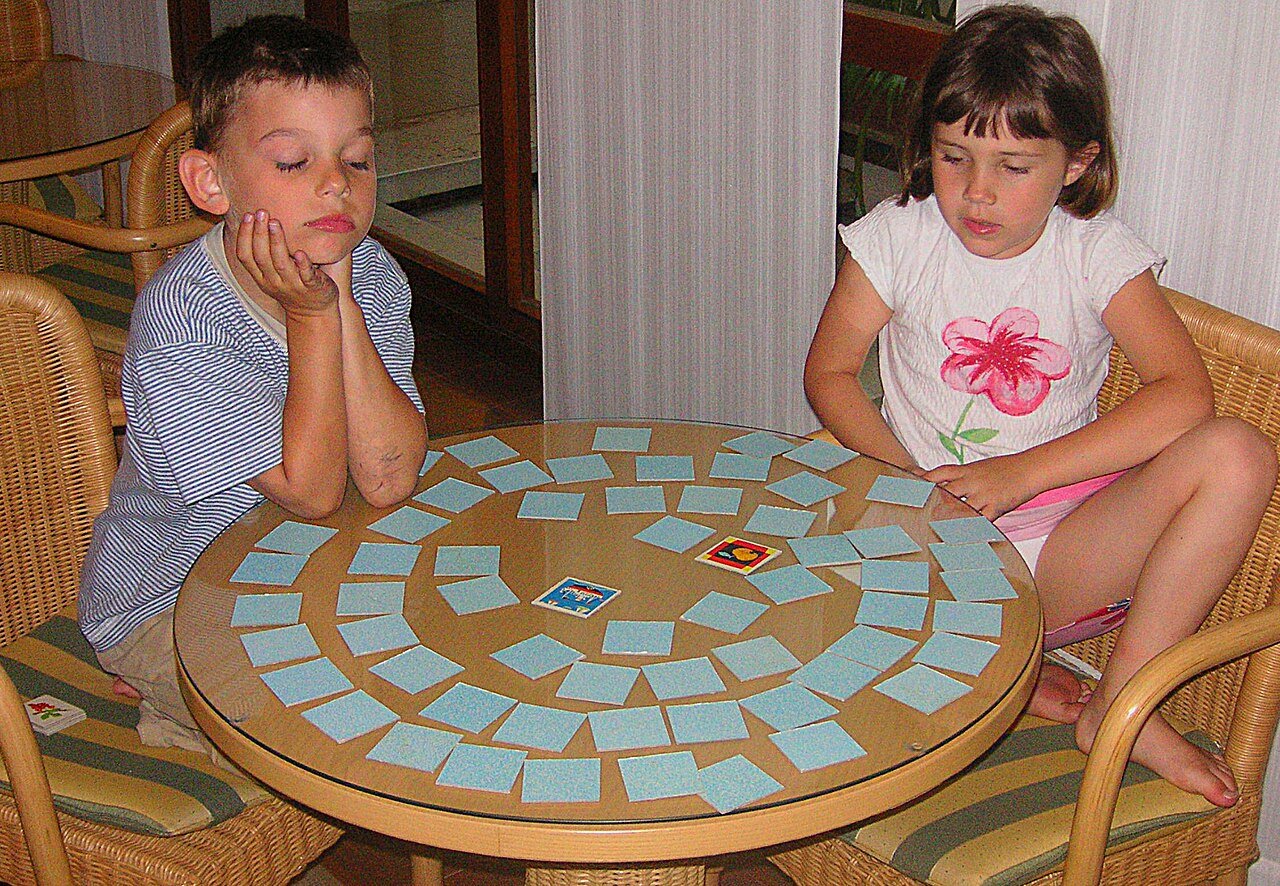
Place a set of cards face down on a table or stick them to the board in a grid. Students take turns turning over two cards, trying to find matching pairs. In a classroom version, match words with their meanings, questions with their answers, or pictures with the words they describe. Memory match is a calm, focused game that works beautifully in small groups or as a whole-class activity on an interactive board. It builds concentration and vocabulary at the same time, and it is one of the few quick games that works just as well with six-year-olds as it does with twelve-year-olds.
8. Simon Says, Vocabulary Edition
Play the traditional Simon Says game, but tie every command to your lesson. “Simon says touch something made of metal” works for a science class, while “Simon says show me the past tense of run” fits a language lesson. Students who move without hearing “Simon says” sit out for one round. The game takes three minutes, gets students moving, and checks understanding in a way that feels like play rather than a test. It is especially useful after lunch, when students need to move their bodies before they can sit and focus again.
9. Quiz Showdown
A quiz game is the fastest way to turn revision into something students actually enjoy. Split the class into teams, ask questions from the board, and award points for correct answers. You can run it with a printed question list, but a digital quiz platform makes it far more exciting, with teams, timers, and surprise bonus rounds. Set it up once and reuse it all week with different questions. Quiz games are among the most popular quick games to play in the classroom for revision weeks, and they are one of the most reliable ways to end a lesson on a high note.
10. Four Corners
Label the four corners of the room with different answers to a question, such as four possible answers to a maths problem or four opinions on a topic. Students move to the corner that matches their answer, and those in the wrong corner sit out for the next round. Four Corners gets the whole class moving and makes every student commit to an answer, which is exactly what a good review activity should do. It works best with questions that have four clear options, and it takes about five minutes from start to finish.
11. Guess Who
One student thinks of a classmate, a famous person, or a character from a book, and the class asks yes-or-no questions to work out who it is. “Is the person a girl?” “Does the person wear glasses?” “Is the person from our story?” This game builds descriptive language and careful questioning, and it is endlessly adaptable. For a history lesson, use historical figures. For a language lesson, use characters from a novel. It needs no materials, takes five minutes, and students love the moment when someone finally guesses correctly.
12. Bingo Blitz
Make a quick bingo card with words from your current topic instead of numbers. Call out definitions, and students mark the matching word on their card. The first student to complete a row or a full card wins. Bingo is easy to prepare — a simple grid on paper or a printed sheet — and it turns vocabulary revision into a game students genuinely enjoy. For a faster version, use a three-by-three grid instead of five-by-five, and the whole game fits into five minutes. It is a calm game that works well at the end of a busy day.
How to Run Quick Games on Baamboozle
If you want the excitement of a quiz game without the preparation, a digital platform does the heavy lifting for you. Baamboozle is a free classroom game platform where you can open a ready-made game on the shared screen and let teams pick tiles, answer questions, and collect points. There is no need for students to have their own devices or accounts — the whole class plays together on one screen, which makes it perfect for a quick five-minute slot.
To get started, visit Baamboozle and browse the library of teacher-made games, or build your own set of questions in a few minutes. Pick a game that matches your topic, project it, and split the class into two or three teams. Each team chooses a numbered tile, answers the question underneath, and earns points for a correct answer. Surprise tiles can add or remove points, which keeps even the losing team excited until the last question. If you are new to the platform, start with a short guide on how to play Baamboozle so your first game runs smoothly from the opening tile.
The real advantage of a digital quiz game is speed. Once your questions are in, you can run the same game with a new class in seconds, and you can reuse it for revision all week. That makes it one of the most practical quick games to play in the classroom when your preparation time is short and your students are ready for something fun.
Tips for Keeping Quick Games Fair and Fun
A good game can turn sour if a few students dominate or if the rules feel unfair, so a little structure helps. Rotate who answers first so the same confident students do not take every turn. In team games, mix the teams up regularly instead of letting the same groups form every time. When a student gives a wrong answer, keep the tone light and move on quickly — the game should feel safe, not stressful.
Keep a visible scoreboard so everyone can see the score, and keep the stakes small. A round of applause or the chance to choose the next game is usually enough of a prize. The best quick games to play in the classroom are the ones students ask for by name, so listen to what they request. Avoid long games that drag on after the excitement fades; five to ten minutes is the sweet spot for most quick games to play in the classroom. End while students are still enjoying it, and they will ask to play again tomorrow. Finally, watch the clock. A quick game that runs over eats into your next activity, so set a clear finish point before you start and stick to it.
Quick Games for Different Moments of the School Day
Different moments call for different games. At the start of the day, a calm game like Categories or Word Chain wakes students up gently and gets them talking. In the middle of a lesson, a fast game like Pictionary Race or Quiz Showdown works as a brain break that recharges attention before the next task. At the end of the day, a quiet game like Bingo or Memory Match helps the class settle down before home time.
You can also match games to the weather and the mood. On a rainy day when students cannot go outside, a movement game like Four Corners or Simon Says burns off energy indoors. Before a test, a gentle quiz game reviews the material without adding stress. After a test, a fun game like Two Truths and a Lie gives the class something light to enjoy. Building a small collection of games for each moment of the day means you always have the right activity ready, and you never have to waste time deciding what to play.
Final Thoughts
The best classroom games are not the complicated ones. They are the simple games you can start in under a minute, play with the whole class, and finish before the energy fades. The twelve games in this guide all meet that test, and each one can be adapted to your subject, your students, and the time you have available. Pick one of these quick games to play in the classroom, try it this week, and pay attention to which games your students ask for again — those are the ones to keep in your regular rotation. With a small collection of quick games to play in the classroom ready to go, those five-minute gaps in the day stop being a problem and start being one of the best parts of your teaching.