
Baamboozle games for kindergarten can turn an ordinary lesson into the part of the day your students ask for. Baamboozle is a browser-based classroom game platform: the teacher opens a game on one shared screen, the class splits into teams, and teams pick numbered tiles, answer questions, and earn points. Surprise tiles can flip the score in an instant. To play or sign up, visit the official platform at Baamboozle.
Why Baamboozle Games for Kindergarten Work So Well
Young children learn through play, movement, and talk — a Baamboozle game gives them all three. Every tile is a small moment of practice dressed up as a contest. Teams let a shy child join in without being put on the spot.
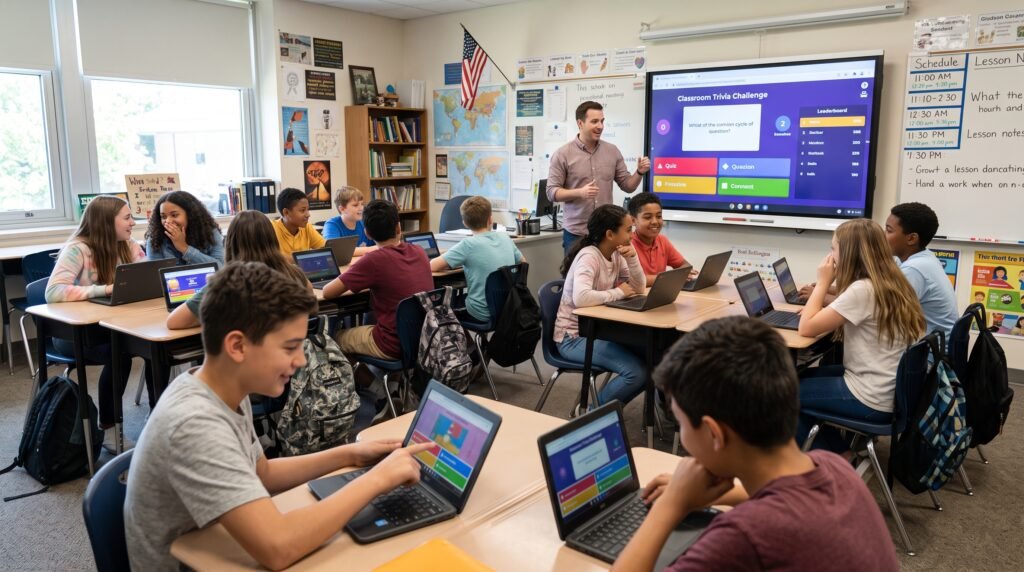
The shared screen is the real win: one big screen everyone can see beats twenty small ones. The teacher controls the pace, reads each question aloud, and can pause to explain an answer. No logins, no devices to hand out. Baamboozle runs on a projector or whiteboard, and over Zoom or Google Meet by screen sharing. New to the platform? See what Baamboozle is.

How to Set Up a Baamboozle Game for Kindergarten
Start by choosing or creating a game with questions your students can actually answer. Search the library by topic and grade level, or make your own. You need an account to create a game, and making your own is often best for kindergarten.
Split the class into two teams — easier to follow than four or five, and it keeps the game moving. Give each team a simple name: the Red Team and the Blue Team.
Explain the rules first — just three: we take turns, we listen, and we cheer for both teams. Do one practice round first. Keep the game to about ten minutes: a short game ends while everyone is still excited, and you can always play again tomorrow.
Baamboozle Games for Kindergarten: Letter, Number and Phonics Ideas
The library holds more than four million public teacher-made games, searchable by topic, language, and grade. These work best with kindergarten and early elementary students.
Letter and Sound Games
Show a picture of an apple and ask which letter it starts with. Show the letter “S” and ask for its sound. Quick questions like these build letter recognition and make a great daily warm-up.
Number and Counting Games
Ask children to count objects on the screen, name the next number, or pick the larger of two numbers. For first and second grade, move on to simple addition and counting in twos, fives, and tens. You read the questions aloud, so pre-readers can still play.
Phonics and Word Games
Show the sounds “c-a-t” and ask the team to say the word. Show a picture and ask for a rhyming word. Short vowel, beginning sound, and sight word games all fit this format, and they are easy to build from this week’s words.
Making Your Own Kindergarten Games
Ready-made games are a good start, but one you make yourself will fit your class better. Pick one topic and eight to twelve questions — enough for a ten-minute game. Use words your students know, and write each question the way you would say it.
Start easy — an early win matters to a five-year-old — then make them a little harder. Read every question aloud as you write it: if it is hard to say, it will be hard to understand. Add picture questions so children who cannot read yet can still join in, and play your game once before class to catch typos. See our guide on how to create fun classroom games with Baamboozle.
Classroom Tips for Playing with Young Children
- Let teams answer together. The team discusses quietly, then one child says the answer aloud.
- Rotate who answers. A different child each round, so everyone gets a turn.
- Make it a routine. The same time each day becomes something children look forward to.
- Keep the energy calm. A quiet signal, like hands on heads, brings the class back to listening.
- Preview library games first. Quality varies, so check for errors and age suitability before class.
Baamboozle Games for Kindergarten and Beyond
The same ideas work for first and second grade, with harder questions. Older students can handle more teams and longer games. Try times tables and spelling quizzes — or let students help write the questions.
Baamboozle+ adds Memory, Four in a Row, Tic Tac Toe, and Bingo — plus up to eight teams and a Class PIN, for classes that play often. Start with the free Basic plan; check the official Baamboozle website for current pricing. To compare platforms, see our Baamboozle alternatives guide.
Frequently Asked Questions
Is Baamboozle suitable for kindergarten?
Yes. The teacher runs the game on one shared screen and students play in teams, with no devices or logins. Questions are read aloud, so pre-readers can still take part.
Do kindergarten students need devices to play Baamboozle?
No. Students need no devices, accounts, or logins. The teacher displays the game on a projector or whiteboard, and the class plays together.
What kind of Baamboozle games work best for kindergarten?
Letter and sound games, counting games, phonics and rhyming games, and simple picture games about colours, shapes, and animals. Keep questions short and games to ten minutes.
Can I make my own Baamboozle games for my class?
Yes — you need an account to create a game. You can also search the library of over four million teacher-made games.
A Short Closing
Baamboozle games for kindergarten work because they are simple: one screen, two teams, questions your students can answer together. Start with letter, number, and picture games, keep sessions short, and make a few games from the words you teach each week. A ten-minute game gives daily practice in phonics, counting, and vocabulary. Still deciding? Our Baamboozle review covers the pros, cons, and plans.