
Ask any teacher what the hardest part of the school day is, and many will say the same thing: keeping thirty children focused, happy, and learning at the same time. Worksheets help, but they do not excite anyone. A lecture helps, but only for a few minutes. Classroom games for kids solve this problem in the most natural way possible. They turn the lesson into something children want to take part in, and the learning happens while they are having fun.
The best classroom games need no special equipment, no long explanation, and no preparation the night before. They work with a whiteboard, a ball, a set of cards, or nothing at all. This guide collects the games teachers actually use, explains why they work, and shows how to match them to the age of your class.
What Are Classroom Games for Kids?
Classroom games for kids are short, structured games played during lessons to teach, review, or practise a skill. They are different from free play. Every game in this guide has a learning goal hiding inside the fun: a spelling game practises words, a number game practises maths, and a guessing game practises speaking and listening. The children think they are playing. The teacher knows they are learning.
A good classroom game has three qualities. It is simple enough to explain in one minute. It lets every child take part, not just the fastest or loudest. And it can be played in ten minutes or less, so it fits into a real lesson without taking over the day. When a game has all three, teachers use it again and again.
Why Classroom Games for Kids Work So Well
Games work in the classroom because they match how children actually learn. A child who forgets a spelling list in five minutes can remember the same words for a week after using them in a game. That is not a trick. It is how memory works: we remember what we use, especially when using it feels good.
Learning sticks better when it feels like play
When children play, their brains are alert and engaged. They are paying attention because they want to win, to answer, or to beat their last score. That attention is exactly what learning needs. A child who is fully focused for ten minutes of a game often learns more than a child who is half-listening for thirty minutes of a worksheet. Classroom games for kids turn that focus into real progress.
Games build confidence
In a game, a wrong answer is just part of playing. Nobody is marked down, nobody fails a test, and the next round gives everyone a fresh start. Shy children who never raise their hands in a normal lesson will call out answers in a game, because the game makes it safe to try. Over time, that confidence carries over into the rest of the lesson.
Games teach teamwork
Many classroom games are played in teams, and teams teach children to listen, to take turns, and to help each other. A strong student learns to explain an answer to a teammate instead of just shouting it out. A quieter student learns that their answer matters to the team. Those are lessons no textbook can teach on its own.
15 Classroom Games for Kids That Need No Preparation
The best classroom games for kids are the ones you can start right now, with whatever is already in the room. These fifteen need no printing, no buying, and no setup. Pick one, explain it in a minute, and play.
1. Twenty Questions. One student thinks of an animal, a person, or an object. The class asks up to twenty yes-or-no questions to guess it. It teaches careful questioning and logical thinking.
2. Word Chain. The teacher says a word. The next student says a word that starts with the last letter of the previous word. It is fast, funny, and excellent spelling practice.
3. Simon Says. A classic for a reason. The teacher gives instructions, and students only follow the ones that start with “Simon says”. It sharpens listening and gives younger children a chance to move.
4. Hot Seat. One student sits with their back to the board. The teacher writes a word on the board, and the class gives clues until the student guesses it. It works for vocabulary in any subject.
5. Number Ball. The teacher throws a soft ball to a student and calls out a sum. The student answers and throws the ball to someone else with a new sum. It keeps the whole class alert because anyone could be next.
6. Pictionary. A student draws a word on the board while the class guesses what it is. It works for vocabulary, science terms, and story characters, and it always gets a laugh.
7. Memory Match. Write pairs of matching words on the board in a grid, then cover them. Students take turns uncovering two squares to find a pair. It builds memory and focus.
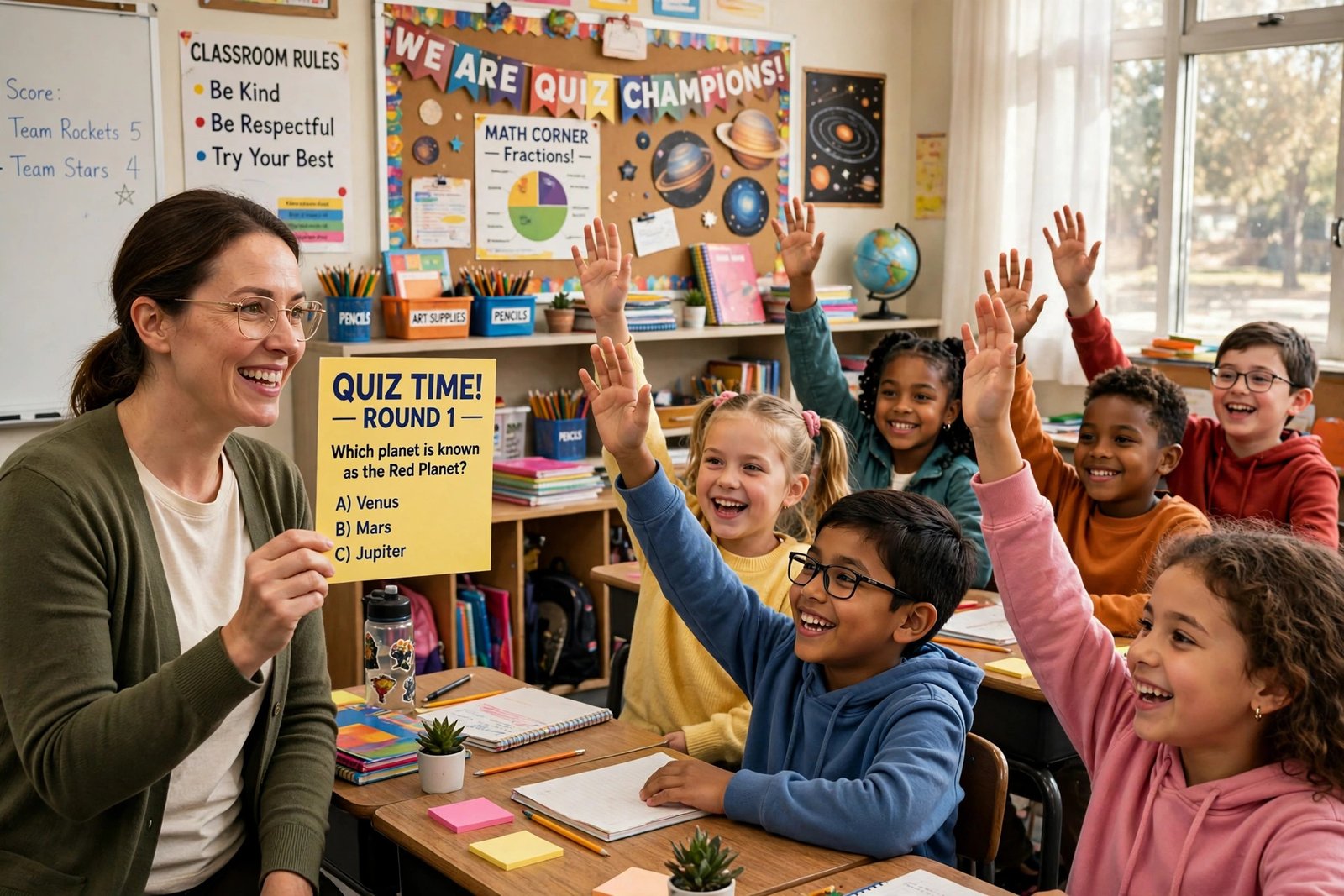
8. Quiz Show. Split the class into two teams and ask questions from the week’s lessons. Keep score on the board. The competition makes revision feel like a television show.
9. Categories. The teacher names a category, such as animals or food, and students take turns naming something in that category. Anyone who repeats or hesitates is out. It builds quick thinking and vocabulary.
10. Story Circle. One student starts a story with a single sentence. Each student adds the next sentence. The story gets stranger and funnier as it goes, and every child practises speaking in front of the group.
11. True or False. The teacher reads a statement about the lesson, and students stand up for true or sit down for false. It is a quick way to check what the class understood.
12. Spelling Bee. A simple spelling competition, one word at a time. It works best in short bursts of five minutes, and every child gets a turn.
13. Charades. A student acts out a word or a phrase without speaking while the class guesses. It is perfect for verbs, animals, and jobs, and it gets even quiet children moving.
14. Bingo. A bingo game with words or numbers from the lesson. Every student plays at the same time, which makes it one of the fairest games in the classroom.
15. Around the World. Two students stand up. The teacher asks a question, and the first to answer correctly moves to the next desk to challenge the next student. The winner is the one who travels furthest around the room.
Classroom Games for Kids by Age Group
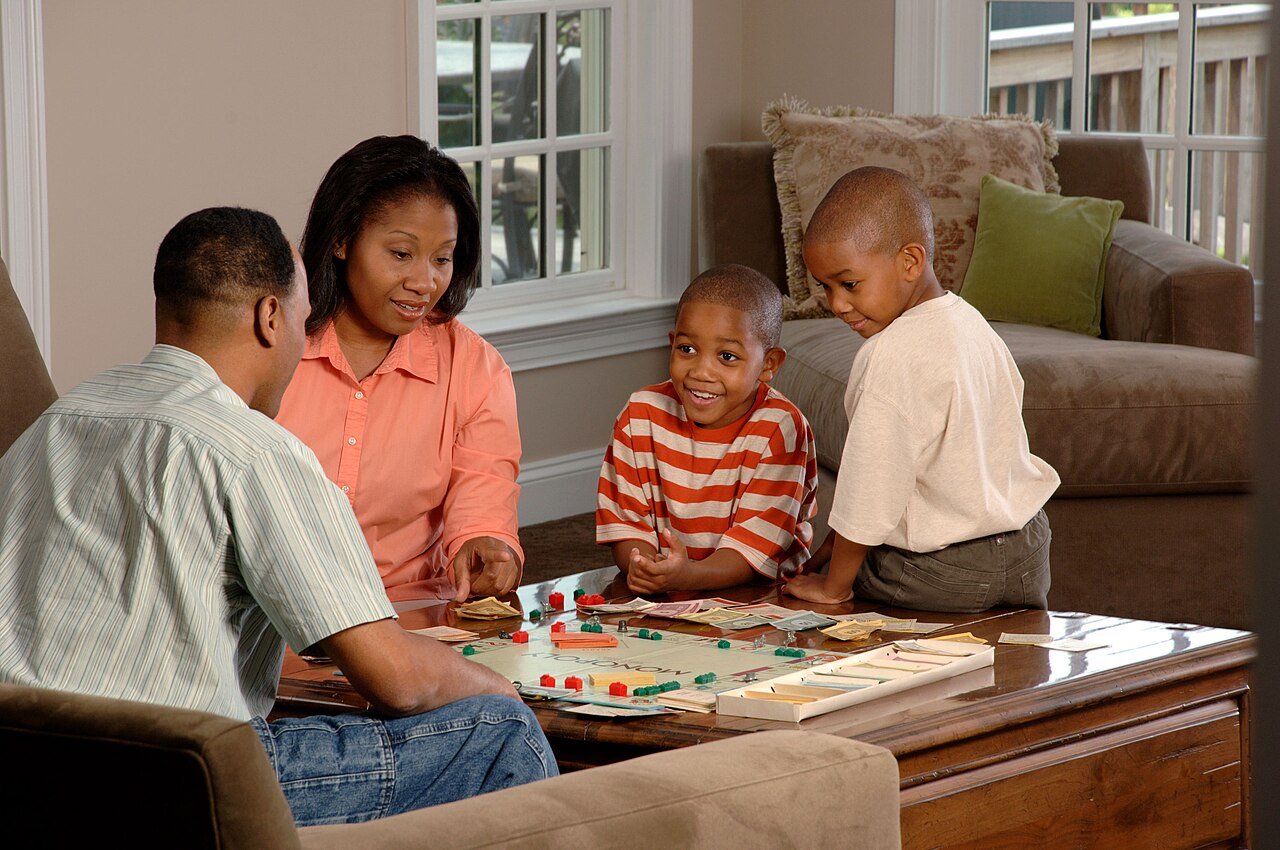
The same game can work for a five-year-old and a twelve-year-old, but only if you adjust it. The trick is to match the game to what children of that age can do and enjoy. Classroom games for kids work best when the challenge is just right: not so easy that it is boring, and not so hard that children give up.
Ages 5 to 7
Younger children need games with movement, pictures, and very simple rules. Simon Says, picture bingo, and matching games are ideal. Keep rounds short, about five minutes, and change the game often. At this age, the game itself is the lesson: children learn to listen, to take turns, and to follow rules while they play.
Ages 8 to 10
Children of this age love competition and can handle games with more thinking. Quiz shows, word chains, Pictionary, and Twenty Questions work well. They can also start playing in teams, which teaches them to work together. Ten-minute games fit this age group nicely, and they enjoy keeping score.
Ages 11 to 12
Older children want games that feel grown-up. Around the World, quiz shows with harder questions, and team challenges work best. They also enjoy making their own games: let them write the quiz questions or design the bingo cards, and they will take the game far more seriously than any game you hand them.
How to Play Classroom Games for Kids on Baamboozle
Some games are even better on a screen, especially when the whole class can see the board at once. Baamboozle is a classroom game platform where the teacher opens a game on one shared screen and the class plays together in teams. No student needs a device or a login, so the game starts in seconds.
If you have never used it before, start with a quick read of how to play Baamboozle, which explains the setup in a few simple steps. Then open a game from Baamboozle’s official site and choose one that matches your lesson. The class picks a numbered tile, answers the question, and earns points for their team. Surprise tiles can change the score in an instant, which keeps every child watching the board until the very last question.
The digital format has one big advantage over paper games: the teacher does not have to prepare anything. Ready-made games already exist for science, maths, vocabulary, and many other topics. Open one, press play, and the lesson becomes a game. It is also easy to repeat: play the same game on Friday that you played on Monday, and the class will try to beat their own score.
Tips for Running Classroom Games for Kids Smoothly
A few habits make the difference between a game that works and a game that falls apart. First, explain the rules once, slowly, and then start. Long explanations lose the class before the game begins. Second, keep the game short. Ten minutes of high energy beats twenty minutes of fading attention. Third, mix the teams. Put strong and quiet students together so every team has a fair chance, and change the teams every week.
Fourth, have a clear signal for stopping. A hand in the air, a countdown from five, or a simple phrase such as “game over, eyes on me” brings the class back in seconds. Fifth, celebrate effort, not just winning. Praise the team that worked well together, the student who tried a hard answer, or the group that improved on last time. When children feel that effort matters, they keep trying.
Common Mistakes to Avoid
The biggest mistake is choosing a game that is too hard or too easy for the age group. A game that is too hard makes children give up. A game that is too easy makes them bored. Watch the room: if half the class has stopped playing, the game is wrong for the moment, and it is better to stop and switch than to push on.
Another mistake is letting the loudest students answer every question. Call on different children by name, let teams discuss before answering, and give quiet students a turn to speak. The game belongs to the whole class, not to three confident voices. A third mistake is playing games too often. Games are at their best when they are a treat, not a routine. Two or three games a week is plenty. Used sparingly, a game stays exciting. Used every lesson, it becomes just another worksheet with points.
Frequently Asked Questions
How many classroom games should I play in one lesson?
One or two short games is usually enough. A ten-minute game at the start of a lesson wakes the class up, and a ten-minute game at the end reviews what they learned. More than that, and the game starts to take time away from the teaching.
What if my students get too excited during a game?
Excitement is a good sign, but it needs a channel. Set the rules before you start: voices at a normal level, hands up to answer, and a clear stop signal. If the noise rises, pause the game for thirty seconds. Children learn quickly that calm play means more game time.
Do classroom games work for older students?
Yes, if the content is right. Older students enjoy quiz games, team challenges, and games they help to create. The trick is to treat them like young adults: harder questions, real competition, and a chance to make their own rules.
Can I play classroom games with a large class?
Yes. Team games work best for large classes because every child belongs to a team and every team plays at the same time. A game on the shared classroom screen also works well, since everyone can see the board.
Do I need to buy anything to play classroom games?
No. Every game in this guide uses things already in the room: a whiteboard, a ball, or nothing at all. Digital games on a shared screen need no printing and no materials either.
Classroom games for kids are not a break from learning. They are learning, in the form children enjoy most. A ten-minute game can do more for memory, confidence, and teamwork than a whole page of exercises, and it costs nothing but a little imagination. Pick one game from this guide, try it in your next lesson, and watch what happens when the whole class leans in at once.
Pingback: Indoor Games for Kids Rainy Day: 25 No-Prep Ideas