
The tablet is charging, the television is off, and the house goes quiet for about forty seconds. Then someone says the words every parent knows: “I am bored.” Screen free games for kids at home are the answer to that moment, and they do not need a single purchase, download, or printed worksheet. All you need is a room, a few everyday objects, and a grown-up who is willing to play for ten minutes. The games in this guide are sorted by age and by energy level, so you can pick one that fits the child in front of you and the time you actually have. Most of them take under five minutes to explain, and many of them work with nothing more than paper, a pencil, and a voice. If you want a screen game later, Baamboozle runs in a browser with no download, but the games below prove that the best play often needs no screen at all.
Why screen-free games work so well at home
Children learn through play, and screen-free play asks more of them than a video does. In a board game a child has to wait for a turn, count spaces, and cope with losing. In a guessing game a child has to listen, remember, and describe what they see. In a building game a child has to plan, fail, and try again. None of that needs a battery. Screen free games for kids at home also solve the practical problem every parent faces: the house is not a classroom, there is no box of equipment, and the game has to start now, with whatever is already in the room. The games below are built around that reality. They use socks, spoons, cushions, paper, and voices. They work in a kitchen, a living room, a hallway, or a garden. And because the rules are short, an older child can teach a younger one, which is often when the real learning happens.
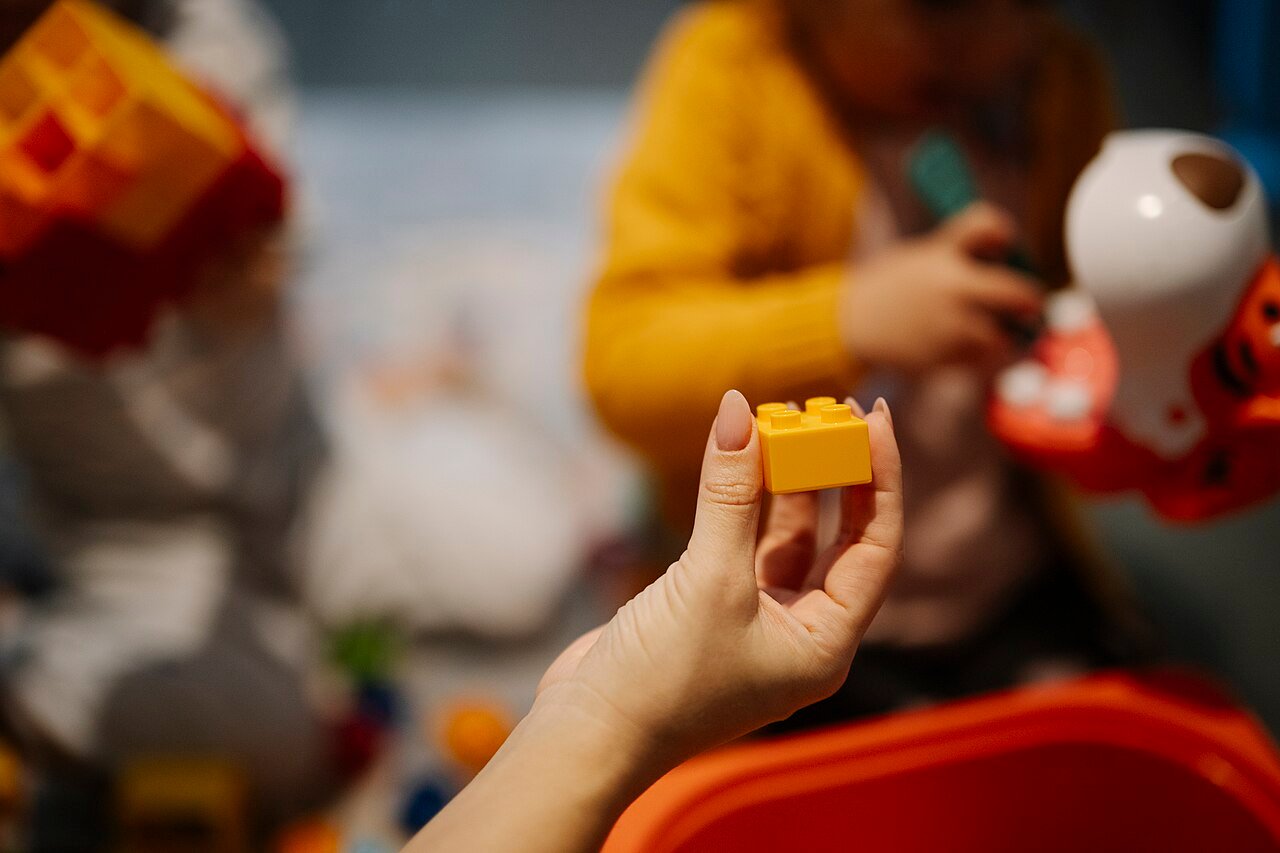
Screen free games for kids at home: ages 3 to 5
Sock matching. Put ten clean socks in a pile and ask your child to find the pairs. For a three-year-old, use socks in bright, different colours. For a four-year-old, add pairs that differ only in pattern. This game builds visual matching and it doubles as help with the laundry.
Animal walk parade. Call out an animal and everyone moves like it across the room: waddle like a penguin, hop like a frog, crawl like a bear. Give each animal ten seconds. Young children love the silliness, and the game quietly builds body awareness and listening skills.
Colour hunt. Name a colour and give your child one minute to find three things in that colour around the house. Start with red, blue, and yellow. For a harder round, name two colours at once and ask for something that has both.
Pillow mountain. Pile the sofa cushions on the floor and let your child climb over them, crawl under a blanket draped across two chairs, and jump from cushion to cushion. Set one rule: feet stay on the cushions, never on the floor, because the floor is lava.
Toy rescue. Hide five small toys around one room while your child waits in the hallway. Then send them in to find all five. Give clues as they get closer: warm, warmer, hot. Young children love being the rescuer, and the game teaches them to search in a system instead of running in circles.
Screen free games for kids at home: ages 6 to 8
Twenty questions. One person thinks of an animal, a food, or a thing in the house. Everyone else asks yes-or-no questions to guess it. Keep the first rounds easy by limiting the choices: only animals, or only things in the kitchen. Children learn to ask useful questions instead of guessing wildly.
The whisper chain. Sit in a line and whisper a short sentence to the first person, who whispers it to the next. The last person says it out loud, and everyone laughs at how much it changed. Use silly sentences with hard sounds, like “The purple penguin packs pickles.”
Card tower challenge. Give each child a pack of old playing cards and ten minutes to build the tallest tower. No tape, no glue. When a tower falls, that is part of the game, and the child who rebuilds fastest usually wins. This is a quiet, focused game that suits a rainy afternoon.
Treasure map. One person draws a quick map of the living room on paper, marks an X, and hides a small prize there. The other person follows the map to find it. Swap roles and make the maps harder each round by adding riddles instead of plain directions.
Story chain. One person starts a story with a single sentence. The next person adds one sentence, and so on around the circle. The rule is that every sentence has to connect to the one before it. After ten rounds, read the whole story back and enjoy how strange it became.
Freeze dance with a twist. Play music and dance until it stops, then everyone freezes. The twist is that each freeze has a shape: freeze like a statue, freeze like a tree, freeze like a robot. Anyone who wobbles sits out for one round and becomes the judge.
Screen free games for kids at home: ages 9 to 12
The alibi game. One child leaves the room. The rest agree on a simple story about something they did together, for example “We baked a cake.” The child returns and asks questions to find holes in the story. The group has to keep their answers consistent. This is a brilliant game for logic and memory.
Word ladder race. Write a word on paper, for example “cold”. The next word must change only one letter, like “cord”, then “card”, then “ward”. Race to see who can reach a target word in the fewest steps. Start with short words and let older children choose the targets.
Blindfold taste test. Blindfold one child and give them three foods to identify by taste and smell: a piece of apple, a cracker, a spoonful of jam. Keep it safe and simple, with foods you know they can eat. Score one point per correct guess and swap roles.
Newspaper tower. Give each team the same number of newspaper sheets and ten minutes to build the tallest free-standing tower. No tape allowed, only folding and rolling. This game rewards planning more than speed, and older children love the engineering challenge.
Two truths and a lie. Each person says three things about themselves: two true and one made up. Everyone else guesses which is the lie. Play it as a family and you will learn things about each other you never knew.
Code breaker. One person writes a short message in a simple code, for example each letter shifted by one, so “cat” becomes “dbu”. The rest of the group has to crack it. Older children can invent their own codes, swap code sheets, and race to decode them.
Screen free games for kids at home for the whole family
Charades night. Write simple actions on slips of paper, like brushing your teeth, riding a bike, or baking a cake. Fold them into a bowl. Each player draws one and acts it out without speaking. Keep a family scoreboard on the fridge and play a round every evening for a week.
The floor is lava, family edition. Set a timer for three minutes. Everyone must cross the living room using only cushions, books, and rugs. If a foot touches the floor, that person goes back to the start. Time the whole family and try to beat your own record.
Quiz night. One person is the quizmaster and reads ten questions: three about animals, three about food, two about the family, and two silly ones. Give each correct answer one point. Rotate the quizmaster every round so everyone gets to write questions.
Build a den. Give the children blankets, chairs, and cushions, and one hour to build the best den in the house. Judge it on three things: does it have a roof, can two people fit inside, and does it have a secret entrance? The den then becomes the reading corner for the rest of the day.
Board game tournament. Pick three board games the family already owns. Play one round of each and keep a running score. The winner chooses the next family film or the next meal. Tournaments work because they give every game a purpose beyond a single round.
Memory tray. Put ten small objects on a tray, show it for thirty seconds, then cover it. Everyone writes down what they remember. Add one object each round until someone gets all of them right. This is a quiet game that works well after dinner.
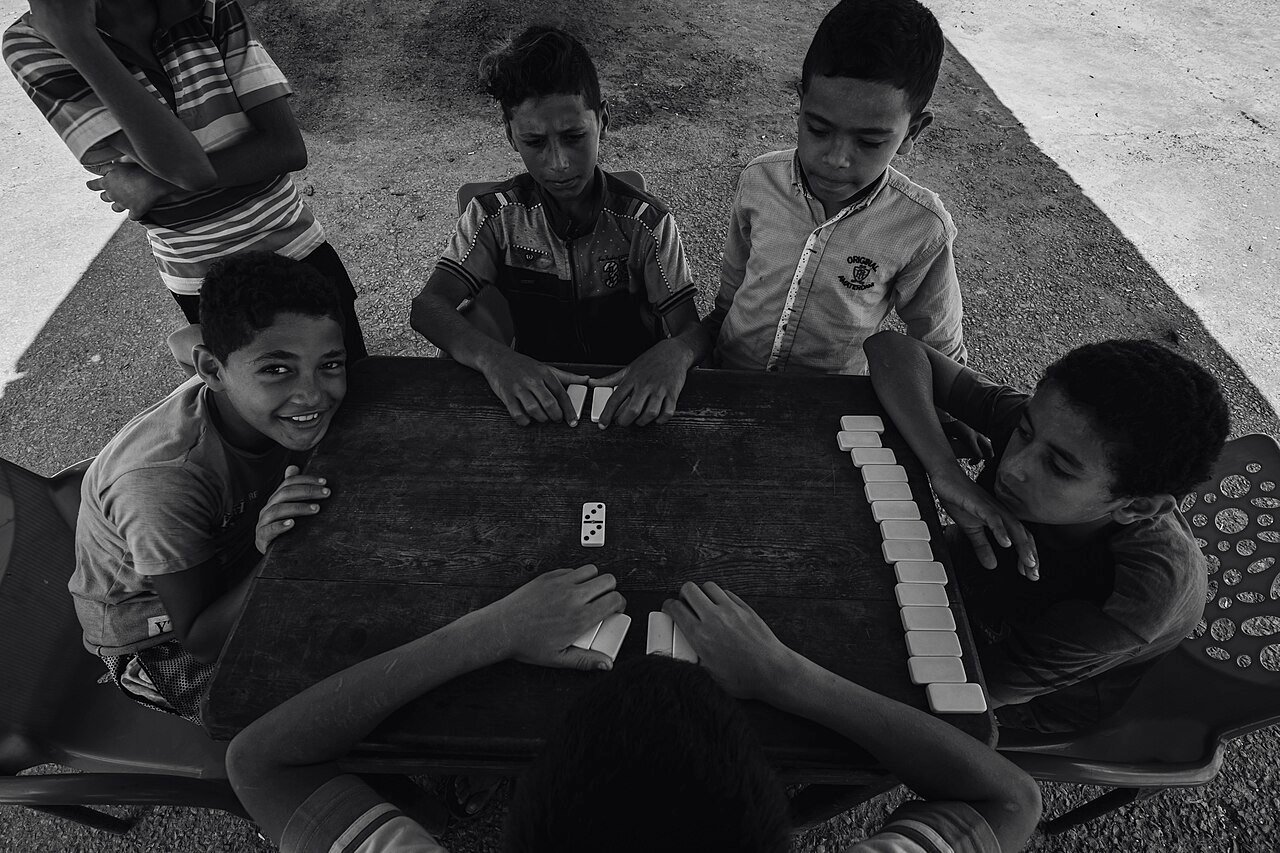
Quiet screen free games for the evening
Story stones. Collect ten small stones and draw a simple picture on each one: a star, a tree, a fish, a house. Put them in a bag. Each person draws three stones and has to tell a story that uses all three pictures. This is a calm game that winds children down before bed.
Shadow puppets. Hold a torch against a wall and make animal shapes with your hands. Teach the children a rabbit, a dog, and a bird. Then let them invent their own shapes and guess each other’s. This game needs nothing but a dark room and a torch.
Guess the sound. One person makes a sound with an everyday object, like tapping a spoon on a glass or crinkling paper. Everyone else guesses what made it. Keep the sounds short and take turns so every child gets to be the mystery sound maker.
The quiet game. Everyone sits still and silent for one minute. The first person to laugh or speak loses. It sounds too simple, and that is exactly why children love it: the challenge is harder than it looks, and the giggles are the point.
Active screen free games that burn energy
Balloon volleyball. Blow up a balloon and use a line of cushions as a net. Hit the balloon over the net without letting it touch the floor. Count how many hits the family can manage in a row and try to beat the record each day.
Obstacle course. Build a course through the house: crawl under the table, hop over the cushions, walk along a line of tape on the floor, and throw a sock into a basket. Time each run and let children design the next version of the course themselves.
Dance freeze relay. One person dances while the music plays. When it stops, they freeze and the next person takes over. The game keeps everyone moving without needing a big space, and it works brilliantly in a kitchen.
Sock basketball. Roll up pairs of socks into balls and throw them into a laundry basket from three different distances. Give one point for the closest throw, two for the middle, and three for the farthest. Keep a running score for the week.
A simple plan for a screen-free afternoon
The easiest way to make screen free games for kids at home work is to plan the afternoon in three blocks instead of trying to fill five hours at once. Start with one active game, like the obstacle course or balloon volleyball, for about thirty minutes. That burns the restless energy. Then move to one quiet game, like the memory tray or story stones, for twenty minutes. Finish with one family game everyone enjoys, like charades or the quiz night, for thirty minutes. Put the plan on the fridge in the morning so the children can see what is coming. When children know the next game is already decided, they stop asking for a screen, because the afternoon already has a shape. If you run out of ideas, these fun classroom games work just as well at home as they do at school, and many of them need no materials at all.
Frequently asked questions
How long should screen free games for kids at home last?
Most children play happily for twenty to thirty minutes per game. Plan two or three short games instead of one long one. When a game ends while everyone is still enjoying it, that is the perfect time to switch, because the children will ask to play it again tomorrow.
What if my child refuses to play without a screen?
Start with the game that looks most like fun and least like a lesson. Balloon volleyball, the floor is lava, and charades all feel like play from the first minute. Join in yourself for the first ten minutes. Children copy what the adults do, and a parent who is laughing on the floor is more convincing than any rule about screen time.
Do screen free games for kids at home need any special equipment?
No. Every game in this guide uses things you already own: socks, spoons, cushions, paper, pencils, and old board games. If a game asks for something you do not have, swap it for the nearest thing in the house. A rolled-up pair of socks works as a ball, and a tea towel works as a blindfold.
How do I choose games for children of different ages?
Pick games where the younger child has a real job to do, not just a watching role. In a quiz night, the youngest child can be the scorekeeper. In a treasure hunt, the youngest child can hide the prize. In a building game, the youngest child can be the chief tester who checks whether the tower stands. When every child has a role, nobody feels left out.