
Hangman is the oldest game in the classroom, and it is still one of the best. All it needs is a board, a marker, and a word. The teacher draws a set of blank lines, the children guess letters one at a time, and the class either solves the word or watches the little stick figure appear piece by piece. There is no preparation, no printing, and no technology to go wrong. A hangman game for kids in the classroom takes thirty seconds to start and can fill five minutes or twenty, depending on what the teacher needs.
The game works because it turns spelling into a puzzle. Children who would groan at a spelling list will fight over which letter to guess next. Every guess is a small decision about how words work: which letters are common, which letters go together, and which letters almost never appear. Those decisions are spelling lessons, even though the children think they are just playing a game. This guide covers the rules, the kid-friendly versions that avoid the hanging theme, word lists by grade, team play, and how to connect hangman to the vocabulary and spelling your class is learning right now.
How to Play Hangman in the Classroom
The rules are simple enough for a six-year-old to learn in one round, but it is worth teaching them properly the first time, because a class that knows the rules will play the game well for years.
Step 1: Choose a word and draw the blanks
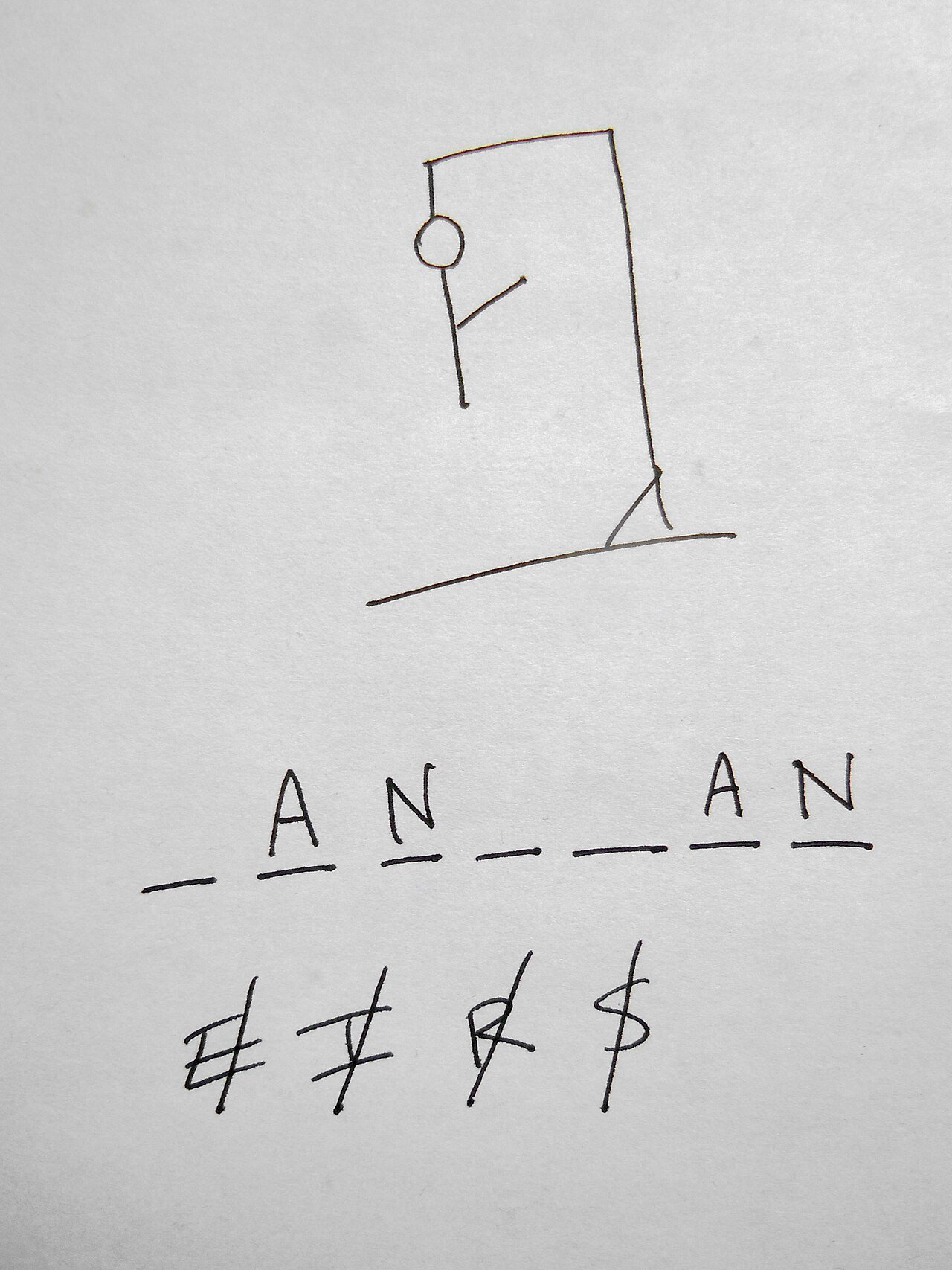
The teacher thinks of a word and draws one short line on the board for each letter. A five-letter word gets five lines. Do not tell the class the word. Do not give any clues yet. The blanks are the whole game, and the children should see them clearly from the back of the room. For younger children, write the number of letters under the blanks so they can count them. For older children, leave the count off and let them work it out.
Step 2: The class guesses letters
Children take turns calling out a letter. If the letter is in the word, the teacher writes it on the correct blank. If the letter is not in the word, the teacher draws one part of the hangman figure: a head, a body, an arm, a leg. The class has a limited number of wrong guesses, usually six to ten, before the figure is complete and the game is over. The team or the class wins by guessing the whole word before the figure is finished. That is the entire game, and it has worked in classrooms for generations.
Step 3: Let the children run it
After two or three rounds with the teacher in charge, hand the game to the children. Let one child choose the word and draw the blanks while the rest of the class guesses. The child who chooses the word has to spell it correctly, which is a spelling test in disguise. The children who guess have to think about letters and patterns. Everyone is learning, and the teacher gets a five-minute break to watch and listen, which tells you more about what the class knows than any worksheet.
Kid-Friendly Versions Without the Hanging Theme
Some teachers and parents are uncomfortable with the hanging theme, and some children find the drawing upsetting. That is a fair concern, and the game is easy to change without losing what makes it fun. The mechanics stay the same. Only the picture changes.
The snowman version
Draw a snowman instead of a hanging figure. Each wrong guess adds one part: a circle for the body, a circle for the head, a carrot nose, two stick arms, a hat. The class wins by guessing the word before the snowman is finished. This version is perfect for winter lessons and it removes the theme entirely. Children love building the snowman almost as much as they love guessing the word, and the game works exactly the same way.
The mystery picture version
Draw a grid of squares on the board and cover a picture behind them. Each wrong guess uncovers one square of the picture. The class has to guess the word before the whole picture is revealed. This version works well when the teacher has a picture that matches the topic, such as an animal for a science lesson or a landmark for a geography lesson. The picture gives the class a visual clue as the game goes on, which helps younger children stay in the game even when they cannot spell the word yet.
Hangman Word Lists by Grade
The word list makes or breaks a hangman game for kids in the classroom. A word that is too easy ends the game in thirty seconds. A word that is too hard ends it in frustration. The lists below are starting points. Adjust them to your class and to the words your children are learning right now.
Kindergarten and first grade words
Use short words the children know: cat, dog, sun, fish, ball, book, cake, rain, snow, star, frog, duck, pig, hen, bed, cup, hat, tree, bird, milk. These words are three or four letters long, they use common sounds, and the children can picture them. Play with pictures as well as words: show a picture of a cat and let the class guess the letters of the word for the picture. The picture gives the children a starting point and stops the game from feeling like a spelling test.
Second and third grade words
Use words from the class spelling list and reading books: garden, planet, castle, dragon, pencil, monkey, turtle, rainbow, popcorn, elephant, giraffe, bicycle, sandwich, thunder, morning, happy, jump, laugh, friend, school. These words are five to eight letters long and they use the spelling patterns third graders are learning: silent letters, double letters, and common endings such as “ing” and “er”. Choose words the class has met recently so the game feels like revision, and avoid words with silent letters the children have never seen, because those words feel unfair even when they are not.
Fourth grade and above words
Use topic words from science, history, and geography: volcano, pyramid, galaxy, oxygen, gravity, fossil, desert, island, climate, compass, machine, energy, journey, mystery, library, captain, harbour, forest, mountain, thunder. These words are longer and harder, and they work because the children are learning them in lessons anyway. A hangman game built from the science topic revises the vocabulary while the children think they are just playing. For older children, add a rule that the team must explain the word after guessing it, which turns the game into a vocabulary lesson.
Team Hangman: How to Play With a Whole Class
Hangman is usually played with the whole class against the teacher, but team versions are better for larger classes because they give every child a job and a reason to care.
Two-team hangman
Split the class into two teams. Team A guesses a letter. If the letter is in the word, Team A gets a point and guesses again. If the letter is not in the word, the teacher draws one part of the figure and it becomes Team B’s turn. The game ends when the word is guessed or the figure is complete. The team that guesses the word gets the points for the round. This version works because the teams take turns, which keeps the pace fast and stops one loud child from dominating. It also adds a real decision: should the team guess a common letter like “e” or take a risk on a less common letter like “z”? That decision is spelling thinking, and the children make it without being asked.
Hangman relay
Write three words on the board, one for each round, and give each team thirty seconds per word. The team that guesses the most words wins. The relay format suits older children because it adds time pressure, and time pressure makes the game exciting. Keep the words at the same difficulty level so the race is fair, and give the losing team a chance to win the next round by choosing the words for the winners. Children love choosing hard words for the other team, and choosing a hard word means spelling it correctly, which is more learning in disguise.
Silent hangman
Play the game without anyone speaking. Children write their letter guesses on small whiteboards and hold them up at the same time. The teacher reveals which letters are in the word and draws the figure for the wrong ones. Silent hangman works brilliantly for classes that are too noisy or for the last ten minutes of the day when the class needs to calm down. It also helps shy children, because nobody has to speak in front of the class. Every child guesses on every round, which means every child is thinking on every round, and that is the best version of the game for learning.

Connecting Hangman to Spelling and Vocabulary
Hangman is most useful when it is connected to what the class is learning. A random game is fun for five minutes. A connected game teaches something that lasts.
Use the weekly spelling list
Build the week’s hangman games from the spelling list. On Monday, play with five words from the list. On Wednesday, play with five more. On Friday, play with the hardest five. The children will learn the spelling list without a single worksheet, and they will remember the words because they fought over them in a game. This is the simplest and most effective way to use hangman in a classroom, and it costs the teacher nothing.
Use topic vocabulary
When the class starts a new topic, build a hangman game from the key words of that topic. A science topic on animals gives you elephant, giraffe, penguin, and crocodile. A history topic on castles gives you knight, armour, tower, and moat. The game introduces the vocabulary before the lessons begin, so the children meet the words in a game first and in a textbook second. Words met in a game are remembered better than words met in a list, because the game gives them a story.
Talk about letter patterns after the game
After each game, take one minute to talk about what happened. Ask the class which letters they guessed first and why. Most children guess vowels first, which is smart, because almost every word has a vowel. Ask which letters they avoided and why. Most children avoid “q”, “x”, “z”, and “j”, which is also smart, because those letters are rare. That one-minute conversation teaches more about how English spelling works than a whole lesson on letter frequency. It also teaches the children to think about their guesses instead of shouting random letters, which makes the next game better.
Common Mistakes to Avoid
The most common mistake is choosing words that are too hard. A word the children have never seen is not a challenge, it is a dead end. The class will guess letters at random, the figure will fill up, and the game will end with nobody learning anything. Choose words the class knows or is learning, and save the hard words for older children who can handle them.
Another mistake is drawing the figure too quickly. Each wrong guess should add one small part, not a whole section. If the figure is complete after three wrong guesses, the game is over before it starts. Use at least eight parts: head, body, two arms, two legs, a face, and a hat or a base. More parts mean more guesses, more thinking, and a better game.
Frequently Asked Questions
Is hangman appropriate for young children?
Yes, with the right version. For children under seven, use the snowman, flower, or rocket version instead of the traditional hanging figure, and use short words with pictures. The game mechanics are the same, and the children get the same spelling practice without any imagery that might worry them. Most teachers find the alternative versions work just as well, and some children prefer them.
How many wrong guesses should a hangman game allow?
Six to ten wrong guesses is the right range. Six makes a fast, tense game. Ten makes a longer game with more thinking time. For younger children, use ten, because they need more guesses to solve the word. For older children, use six, because the pressure makes the game exciting. Whatever number you choose, draw the figure in the same number of parts so the children can see how many guesses they have left.
Can hangman be played on Baamboozle?
Hangman itself is a board game, not a Baamboozle game, but the two work well together. Play hangman as a warm-up, then switch to a Baamboozle quiz on the same topic for the main activity. The hangman round wakes the class up and introduces the vocabulary, and the Baamboozle game revises it properly. For more quiz game ideas on the same topics, the guide to Baamboozle vocabulary games has games for every subject. The official Baamboozle website has the free tools to build those quizzes in minutes.
What if the class guesses the word in the first minute?
That means the word was too easy. Congratulate the class, then play a second word that is longer or uses a trickier spelling pattern. Keep a list of harder words ready for exactly this moment.
A hangman game for kids in the classroom is the simplest game a teacher can play, and it is still one of the most effective. It needs no preparation, no materials, and no technology, and it teaches spelling, vocabulary, and thinking in every single round. The trick is to choose the right words, keep the game short, and let the children run it themselves as soon as they can. Start with one word tomorrow, using a word from your current spelling list. Watch how the class reacts, and adjust the difficulty until the game is challenging but fair. Within a week, hangman will be a routine the children ask for, and the spelling practice inside it will be real.