
Spelling practice has a reputation problem. For most children, it means a list of words on a Monday, a test on a Friday, and a long week of copying each word out three times in between. It works for some children and bores the rest, and it rarely teaches them why words are spelled the way they are. Baamboozle spelling games change the deal. They turn the weekly list into a contest, a puzzle and a team challenge, and they give children a reason to look closely at every letter.
This guide goes much deeper than a single spelling round tacked onto a vocabulary game. You will find a complete spelling bee format you can run in class, a system for setting up a weekly spelling list that actually gets learned, choose the correct spelling rounds that target the exact errors your class makes, dictation rounds that connect spelling to real writing, and seven more game formats to rotate through the term. Everything here is designed to be built in Baamboozle in a few minutes and played with a whole class on one shared screen.
Why Baamboozle Works So Well for Spelling
Spelling is a visual skill as much as a memory skill. Children who spell well do not just remember sounds; they remember what words look like. That is why seeing a word on a big screen, discussing it with teammates, and then spelling it aloud is so effective.
The team format also solves the biggest problem with spelling tests, which is fear. In a written test, a child who spells a word wrong gets it wrong alone, in silence, with a red mark to prove it. In a Baamboozle game, the team discusses the spelling together, so a child can suggest a letter, hear a teammate suggest a different one, and think about which one looks right before anyone commits. That discussion is where the learning happens.
Setting Up a Weekly Spelling List That Gets Learned
A spelling game is only as good as the list behind it. A random list of hard words teaches nothing; a well chosen list teaches a pattern children can use on words they have never seen before.
Start with a pattern, not a list. Each week, pick one spelling pattern your class needs. It might be words ending in tion, words with the silent e, words where c makes an s sound, or words with double letters. Then choose ten words that follow that pattern, plus two review words from earlier weeks.
Introduce the list on Monday with a short Baamboozle game, not a worksheet. Play a five minute game where each question shows a word from the list and the class reads it together. Talk about the pattern as you go. Ask children what the words have in common, and let them discover the rule themselves before you tell them.
Practise the list in short bursts during the week. Ten minutes on Tuesday with a choose the correct spelling game, ten minutes on Thursday with a dictation round, and the full spelling bee on Friday.
The Classroom Spelling Bee: Full Rules and Rounds
The spelling bee is the classic spelling contest, and it adapts beautifully to Baamboozle. Here is a complete format you can run in a single lesson.
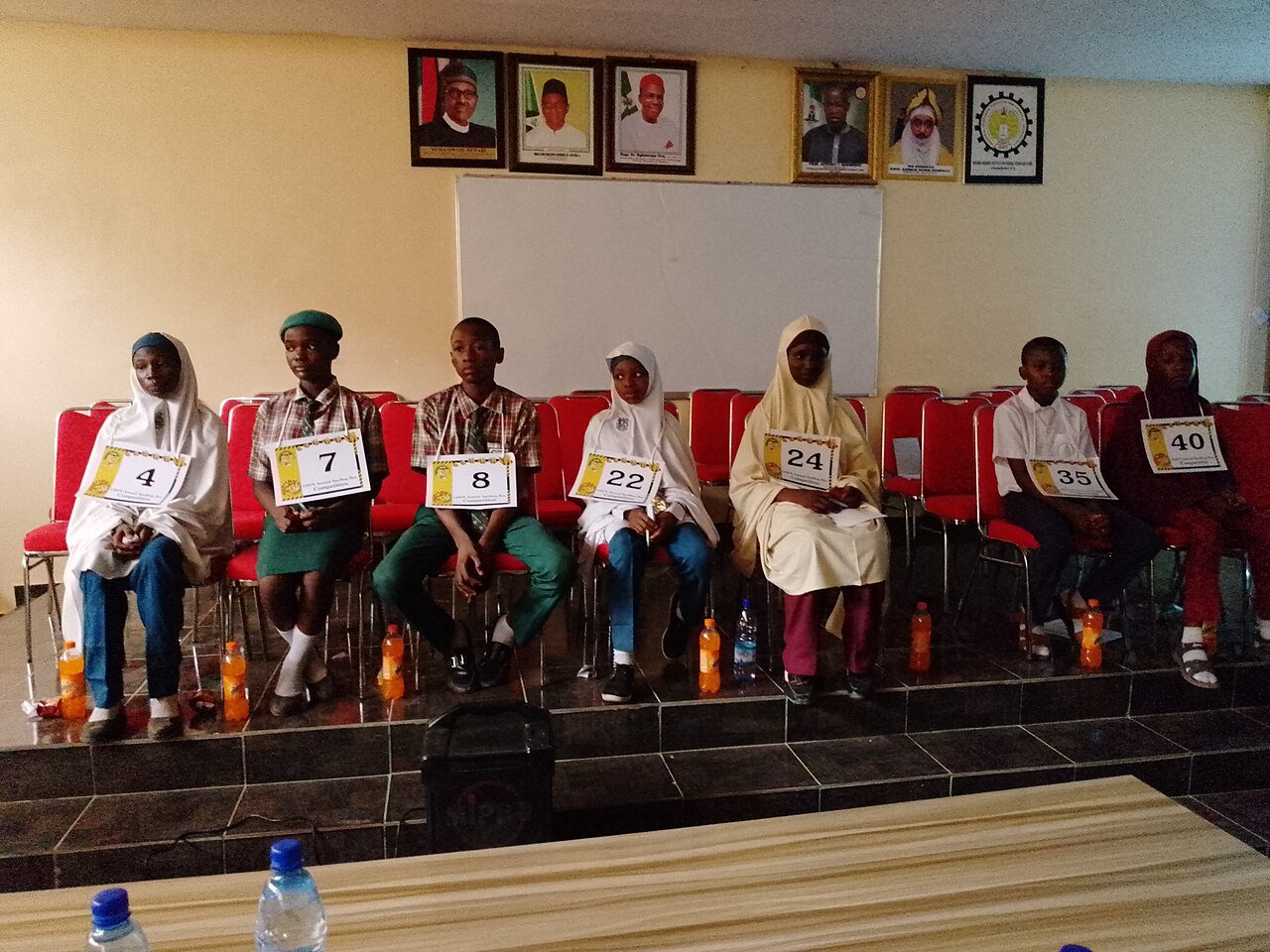
Set up three rounds, each one harder than the last. Round one is the warm up round. Each question shows a word and asks the speller to spell it aloud, letter by letter. Every child who spells their word correctly stays in the game, and anyone who misses a word sits down but keeps watching and can rejoin as a helper in the team round. Use the easier words from the week’s list for this round, and give each speller a clear sentence using the word before they start, so they know which word you mean. For example, say the word, use it in a sentence, then say the word again: “Friend. My best friend is called Sam.
Round two is the team round. Split the remaining spellers into two teams. Each question shows a word, and the team has thirty seconds to agree on a spelling and write it on a whiteboard. This round is where the discussion happens, and it is the most valuable part of the bee, because children argue about double letters, silent letters and tricky endings, and that argument is exactly the thinking you want.
Round three is the final. The last two or three spellers stand at the front. Each question is a word from the hardest end of the list, or a new word that follows the same pattern but was not on the list. This is the clever part: a child who has learned the pattern can spell a new word correctly even though they have never seen it before. If both finalists spell a word correctly, play another round. If one misses and the other spells the same word correctly, the second speller wins.
Set the rules clearly before you start. A speller may ask for the word to be repeated, used in a sentence, or for the definition. A speller may start again if they stumble, as long as they have not finished the word. The judge, which is you, has the final say, and you should have the correct spellings written down in front of you so there is no argument. Keep the tone warm and celebratory.
The Baamboozle game modes guide explains the different ways to run a Baamboozle game, including team modes that suit the team round of a bee. The games themselves are built on the official Baamboozle site, where you can also search for spelling games shared by other teachers and adapt them to your own list.
Choose the Correct Spelling Rounds
Choose the correct spelling is the most useful Baamboozle spelling game after the bee itself, because it targets the exact mistakes your class actually makes. Instead of asking children to spell a word from nothing, you show them two or three versions of it and ask which one is right.
Build your questions from real errors. When you mark writing, keep a note of the misspellings you see most often. If half the class writes seperate instead of separate, make that a question. If they write definately instead of definitely, make that a question. If they confuse their and there, make that a question.
Make the wrong options plausible. The classic mistake is making the wrong answer so obviously wrong that children guess it without thinking. Good wrong options differ by one letter, or swap two letters, or use a common error pattern. For example, the options for necessary might be necessary, neccessary and necesary. For accommodate, try accommodate, accomodate and acommodate.
Dictation Rounds: Spelling Inside Real Sentences
Dictation is where spelling stops being a party trick and starts being a writing skill. In a dictation round, you read a sentence aloud, and children must write it down with every word spelled correctly. It is harder than spelling single words, because children must hold the sentence in their memory, spell each word, and think about capital letters and punctuation at the same time.
Run dictation inside Baamboozle by showing a picture or a sentence starter on the screen while you read the sentence aloud. Each question can be one sentence, and the team writes it on a whiteboard or a piece of paper. After each sentence, show the correct version on the screen and let teams mark their own work.
Keep the sentences short and use words from the current list plus words the class already knows.
7 More Baamboozle Spelling Games to Rotate
1. Scrambled Letters
Each question shows the letters of a spelling word in a jumbled order, and teams race to unscramble them. This game is excellent for children who know what a word sounds like but cannot remember the order of the letters.
2. Missing Letters
Show a word with two or three letters blanked out, and give the team a choice of letters to fill in. For example, _ _ cessary with the options ne, na and ni, or accom_ _date with mm, m and nn.
3. Word Pattern Sort
Show a set of words on the screen and ask teams to sort them into two groups. The groups might be words with double letters and words without, words where ch makes a k sound and words where it makes a ch sound, or words that follow the pattern and words that break it.
4. Team Spelling Relay
Line the teams up and give each team a whiteboard. Each question shows a word, and the first child in line runs to the board, writes one letter, and runs back. The next child writes the next letter, and so on until the word is complete. The team that finishes the most words correctly in five minutes wins.
5. Spelling Bingo
Give each child a bingo grid with spelling words from the week’s list. In Baamboozle, each question shows a definition or a sentence with a missing word, and children must work out which word it is and cross it off their grid.
6. Homophone Showdown
Homophones are words that sound the same but are spelled differently, like to, too and two, or their, there and they are. Each question gives a sentence with a gap, and the team must choose the correct homophone.
7. Spelling Detective
Show a short paragraph on the screen with five spelling mistakes hidden in it. Teams have two minutes to find and correct all five. This game is the closest to real proofreading, and it teaches children to read their own writing with a critical eye.
Spelling Word Lists by Grade
A good list matches the pattern your class is learning. Here are starting points for each stage, grouped by pattern rather than by difficulty alone.
For younger children, start with simple patterns: words with the magic e, like make, take, cake, bike, home, rope, cute, fine, hope and ride; words with double letters, like bell, well, miss, pass, full, egg, buzz, off, mill and hill; and words with sh and ch, like ship, shop, fish, wish, chop, chin, chat, much, such and rich. These patterns are easy to hear and easy to see, which makes them a good first step.
For middle grades, move to patterns that need more attention: words ending in tion and sion, like station, nation, action, question, division, television, decision, revision, mansion and session; words with silent letters, like know, write, lamb, thumb, castle, listen, honest, doubt, climb and gnome; and words where c makes an s sound, like city, circle, cycle, face, dance, prince, pencil, mice, cell and cent. These lists are where children start to learn that English spelling has rules, even if the rules have exceptions.
For older children, use lists that test real understanding: words with ible and able, like possible, terrible, visible, horrible, comfortable, enjoyable, breakable, washable, valuable and reliable; words with ous, like famous, dangerous, nervous, curious, furious, glorious, joyous, serious, obvious and various; and commonly confused words, like separate, definitely, necessary, accommodate, embarrass, occurrence, recommend, environment, government and beginning. These are the words that appear in tests and in secondary school writing, so they repay the effort.
How to Track Progress Without Killing the Fun
Games are fun, but you still need to know whether children are learning. The trick is to track progress quietly, without turning the game back into a test.
Use dictation rounds as your main check. A child who spells words correctly in dictation can use them in writing, which is the real goal. A child who can spell words in a bee but not in dictation needs more sentence level practice, so give them dictation sentences as homework rather than more word lists.
Frequently Asked Questions
How many words should be in a weekly spelling list?
Ten new words plus two review words works well for most classes. More than twelve and children cannot practise them all properly. Fewer than eight and the list does not give enough examples of the pattern to learn from. Younger children can start with eight words and build up.
How long does it take to build a Baamboozle spelling game?
About fifteen minutes the first time, and about five minutes once you have a template. The fastest method is to copy last week’s game, replace the words, and change the question types. Some teachers build the whole term’s games in one sitting, using a different format for each week so the games stay fresh.
Can I use Baamboozle spelling games with children who struggle with spelling?
Yes, and the team format actually helps them more than a written test does. Let struggling spellers play in mixed ability teams, give them the choose the correct spelling version of the game before the full spelling bee, and let them use a word card for the first round. The goal is for them to practise the words, not to be embarrassed in front of the class.
Should I use the same game format every week?
No. Rotate at least three formats across the week, and change the Friday game every two or three weeks. Children learn best when the challenge is familiar but the format is fresh, so keep the word list system the same and vary the games around it.