
Test review is the dullest part of the school year. The teacher knows the children need to revise, the children know they need to revise, and nobody wants to do it. Worksheets feel like punishment, revision booklets feel like homework, and the children switch off within minutes. A game changes that completely. Baamboozle games for test review turn the same revision into a competition the children actually want to win, and the learning that happens inside the game is better than the learning that happens on a worksheet, because the children are paying attention.
Baamboozle is a quiz game played on one shared screen. The teacher opens a game, the class splits into teams, and students take turns picking tiles and answering questions. There are no student logins and no devices to hand out, which means the game starts in under a minute. For test review, the format works because it does three things a worksheet cannot do. It makes the children think under gentle pressure, which is what a test does. It gives instant feedback, so a wrong answer is corrected immediately instead of sitting wrong in a book until the teacher marks it. And it makes revision social, so the children learn from each other while they play. This guide covers how to build baamboozle games for test review, ready game ideas for maths, science, spelling and reading, and the timing and fairness habits that make review games work.
How to Build a Test Review Game
A test review game is different from a normal Baamboozle game. A normal game can be about anything. A review game must be about the test, and it must cover the topics, the vocabulary, and the question styles the children will meet. Building it well takes about thirty minutes, and that time is worth it, because a good review game is the best revision a class can do.
Step 1: List the topics the test will cover
Write down every topic, every key word, and every skill the test will cover. Then sort them into groups: the topics the class knows well, the topics they are shaky on, and the topics they have forgotten. The game should spend the most time on the shaky and forgotten topics, because those are the ones where revision makes the biggest difference. A game that only revises what the class already knows is fun but useless. A game that targets the weak spots is the one that lifts the scores.
Step 2: Write questions in the style of the test
If the test uses multiple choice, write multiple-choice questions. If the test uses short answers, write short-answer questions. If the test asks children to explain their reasoning, write questions that ask for an explanation. The game should feel like the test, so the children walk into the test having already answered similar questions. This is the most important step in building a review game, and it is the one most teachers skip. A game built from random questions is fun. A game built from test-style questions is revision.
Step 3: Mix easy and hard questions
A good review game has a mix: about half easy questions the whole class can answer, a third medium questions that need thinking, and a few hard questions that challenge the strongest children. The easy questions build confidence and keep the score moving. The medium questions do the real revision. The hard questions give the best children something to aim for. If every question is hard, the class will give up. If every question is easy, the class will not learn anything. The mix is what makes the game work.
Step 4: Play it in the week before the test, not the day before
Play the review game three or four times in the week before the test, with different questions each time. Repetition over several days is far better than one long session the day before. The brain remembers things it has met several times, and it forgets things it has met once. Play a short game on Monday, another on Wednesday, and a final one on Friday morning. By Friday, the children will have answered the same topics three times, and they will walk into the test knowing them.
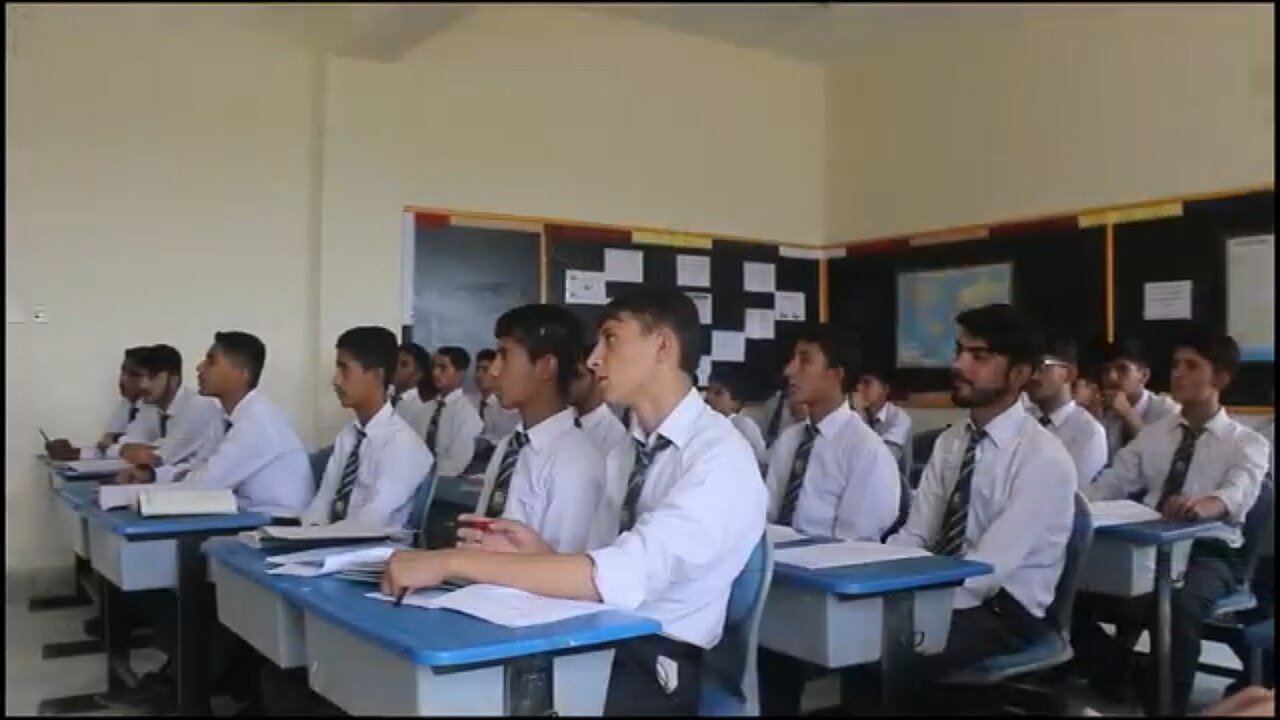
Maths Test Review Games
Maths is the subject where review games help the most, because maths tests are predictable. The topics are known, the question styles are known, and the skills can be practised in a game that looks like the test.
Times tables and number facts race
Each tile shows a multiplication or division question from the test topics. The team has a few seconds to agree on the answer. Give a point for a correct answer and a bonus point if the team can say the related fact, such as the division fact that goes with a multiplication. The bonus point is the clever part, because it connects the facts in the children’s minds, which is what the test will ask them to do. Play this game fast, with a time limit on each tile, because the test will have a time limit too, and the children need to practise answering under pressure.
Word problem challenge
Each tile tells a short word problem from the test topics: a shop problem, a sharing problem, a measuring problem. The team has to work out the answer together. Word problems are the hardest part of a maths test because they need reading, maths, and thinking all at once. The team format helps, because four children thinking together can untangle a problem that would defeat one child alone. Read each problem out loud, give the team time to talk, and ask the team to explain their answer, not just give a number. The explanation is where the learning lives, and it is also what the test will reward.
Fractions and decimals review
Each tile shows a fraction or a decimal and the team has to do something with it: order it, compare it, add it, or convert it. Fractions and decimals are the topics most children find hardest, and they are the topics most likely to appear on the test. Use pictures where you can: a pizza cut into slices, a chocolate bar divided into pieces, a number line with fractions marked on it. Pictures make fractions real, and real fractions are easier to remember than abstract ones. Keep the numbers small and the questions clear, and the game will do more for the class than a page of fraction exercises.
Science and Topic Review Games
Science and topic tests ask for facts, vocabulary, and explanations. Review games for these subjects should test all three, because the test will.
Vocabulary match game
Each tile shows a key word from the topic and the team has to explain what it means. Photosynthesis, gravity, evaporation, habitat, fossil, orbit. The team gets a point for a correct explanation and a bonus point if they can use the word in a sentence. Vocabulary games work well on Baamboozle because the tiles can show the word clearly, and the team format gives the children time to discuss what it means. A child who cannot explain a word alone can often explain it with the help of a teammate, and that shared explanation is real learning.
True or false review
Each tile makes a statement about the topic and the team has to say whether it is true or false. The Earth orbits the Sun: true. Plants need sunlight to grow: true. Water boils at fifty degrees: false. True or false games are fast, they work for any subject, and they test the facts the test will ask about. They also create arguments, because the children will disagree with each other, and those arguments are good teaching, because they make the children think about evidence. When a team disagrees, ask them to explain their answer before you reveal whether it is true or false.
Spelling and Reading Review Games
Spelling and reading tests are about patterns, vocabulary, and comprehension. Review games for these subjects should practise all three.
Spelling pattern race
Each tile shows a word with a missing pattern, and the team has to fill the gap. “C__tch” is catch, “li__t” is light, “th__ough” is though. Pattern games are better than random spelling lists because they teach the rule behind the words. After the game, write the pattern on the board and ask the class for five more words that follow it. That two-minute follow-up turns a fun game into a spelling lesson that lasts, and it is the kind of pattern knowledge the test will reward.
Comprehension quiz
Build a game from the texts the class has read. Each tile asks a question about a text: why did the character do that, what happened next, what does this word mean in the story. Comprehension questions are harder than recall questions, and the team format gives children time to discuss their ideas. A child who understood the story differently can hear another child’s view and change their mind, which is real reading comprehension happening in real time. Use a mix of easy recall questions and harder “why” questions so every team can score points while the best readers still have something to think about.
Grammar spot-the-error game
Each tile shows a sentence with one grammar error, and the team has to find it and fix it. A missing full stop, a wrong verb tense, a misplaced apostrophe. Spot-the-error games are excellent test preparation, because grammar tests ask children to find and fix errors, and a game that practises that skill in a fun way is far better than a worksheet that practises it in a boring way. Keep the sentences short and the errors clear, and give a bonus point if the team can explain why the sentence was wrong.
Timing and Fairness: The Habits That Make Review Games Work
The most important habit is to play the review game more than once. One game is a fun afternoon. Three games over a week is revision. The repetition is what makes the facts stick, and the variety of questions across the three games is what makes the revision complete. Do not play the same game three times. Build three different games from the same topics, and the class will meet the material from three different angles.
Another habit is to review the wrong answers. After the game, take five minutes to go through the questions the class got wrong. Do not just give the right answer. Ask the class why the wrong answer seemed right, and explain the thinking that leads to the correct one. Those five minutes are the most valuable part of the whole game, because they fix the misunderstandings that would have cost marks in the test. A game without a review is entertainment. A game with a review is teaching.
Frequently Asked Questions
How far before a test should I play baamboozle games for test review?
Start a week before the test and play three or four short games across the week. Play one game on Monday, one on Wednesday, and a final one on the morning of the test or the day before. Repetition over several days is far better than one long session the day before, because the brain remembers things it has met several times. A single game the night before the test is better than nothing, but it is not as good as a week of short games.
How many questions should a test review game have?
Sixteen to twenty-four questions is the right range. Sixteen questions make a fifteen-minute game, and twenty-four make a twenty-minute game. Fewer than sixteen and the game does not cover enough of the test. More than twenty-four and the class will lose energy before the end. If the test covers more than twenty-four questions worth of material, split it into two games and play them on different days.
What do I do when the class keeps getting the same questions wrong?
That is useful information, not a failure. If the class keeps getting the same questions wrong, it means the topic has not been taught well enough, or the children have a misunderstanding that needs fixing. Stop the game, teach the topic again properly, and then play the game again the next day. A game that reveals a gap in understanding has done its job. The worst thing a teacher can do is ignore the gap and hope the test does not ask about it, because it almost certainly will.
Are Baamboozle games good for test review in every subject?
Yes. The format works for any subject where the test asks questions with clear answers: maths, science, spelling, grammar, geography, and history. For subjects where the test asks for long written answers, such as essay writing, the game is less useful as direct preparation, but it is still useful for revising the facts and vocabulary the essay will need. For more science game ideas, the guide to Baamboozle science games has games for every topic in the science year. The official Baamboozle website has the free tools to build your review games in minutes.
Baamboozle games for test review are the best revision a class can do, because they make the children think under pressure, give instant feedback, and let the children learn from each other. Start by listing the topics the test will cover, build a short game from the weakest topics, and play it three times in the week before the test. Review the wrong answers after each game, and watch the children’s confidence grow. By the day of the test, the class will have answered the same topics three times, and they will walk into the test knowing them. That is what revision is for, and a game is the best way to do it.