
Every parent knows the moment. You arrive at the hotel, the kids bounce on the bed for five minutes, and then the question comes: “What do we do now?” The room is small, the toys are at home, the television has five channels, and it is raining outside. That is when games for kids in a hotel room save the day.
A hotel room is a difficult place to play. There is no garden, no big table, no toy box, and the walls are thin. The games that work here are quiet, small and need almost nothing: the furniture, the view from the window, a pen and a piece of paper, or nothing at all. The best ones start in ten seconds, because a bored child will not wait for you to set something up.
This guide gives you fifteen games that work in a hotel room, from the classic I Spy to a scavenger hunt that uses the room itself. It also covers what to pack, how to keep the noise down, and which games suit each age.
What Makes a Good Hotel Room Game
A good hotel room game has four qualities. First, it is quiet. Hotel walls are thin, and the neighbours on the other side do not want to hear shouting at nine in the evening. The best games are played at a whisper, or in silence with paper and pen.
Second, it needs little or no space. A hotel room has one bed, one small table and a narrow strip of floor. Games that need running, jumping or a big playing area will not work. Games that can be played sitting on the bed will.
Third, it needs no special equipment. You did not pack a board game, and the hotel does not have one. The game should work with what is already in the room: a pen, a piece of paper, a pack of cards if you remembered to bring one, or nothing at all.
Fourth, it should be short. Children in a hotel room are often tired from travelling, and their patience is short. A game that takes five to ten minutes is right. If it goes well, you can play it again. If it goes badly, you can stop and try something else without anyone feeling they have wasted time.
The games in this guide all meet these four tests. That is why they work in a hotel room, and why they also work in a car, on a train, or in a waiting room.
15 Games for Kids in a Hotel Room
These fifteen games need almost nothing. Start with the first few, and add the rest as the evening goes on.
1. I Spy
The classic hotel room game. “I spy with my little eye, something beginning with L.” The lamp, the light switch, the luggage. It works because a hotel room is full of new things to look at, and every object is a possible answer. For young children, use colours instead of letters: “I spy something blue.” It is quiet, it needs nothing, and it can fill ten minutes easily.
2. Twenty Questions
One person thinks of something, and the rest of the family asks up to twenty yes-or-no questions to work out what it is. “Is it alive? Is it bigger than a dog? Can you eat it?” It needs nothing and it makes everyone think. Start with easy topics like animals and foods, then move to harder ones like famous people or places you have visited.
3. Would You Rather
Would you rather swim with dolphins or fly in a hot air balloon? Would you rather have a room with a view of the sea or a room with a swimming pool? There are no wrong answers, everyone has an opinion, and the game produces the best conversations. It is perfect for a hotel room, because it is really a talking game, and talking is free.
4. Story Chain
One person starts a story with a sentence. The next person adds a sentence. The next adds another. “Once upon a time, a boy found a key in his hotel room. The key opened a door that was not on any map. Behind the door was a staircase that went down, down, down.” The story grows, and it is usually hilarious. It is quiet, it needs nothing, and it works for any age.
5. Hotel Room Scavenger Hunt
Make a list of things to find in the room: something round, something blue, something with a button, something made of glass, something with writing on it. The children search the room and tick off each item. It turns the hotel room into a treasure hunt, and it teaches children to look closely at their surroundings. Keep the list short, ten items is enough.
6. Tic-Tac-Toe
Three in a row wins. It takes thirty seconds to play, which makes it perfect for a quick game while you wait for dinner. All you need is a pen and a piece of paper. For a twist, play on a bigger grid, four in a row on a five-by-five board, which is much harder and much more fun for older children.
7. Hangman
One person thinks of a word and draws a dash for each letter. The others guess letters, one at a time. A right guess fills in the letter. A wrong guess adds a part to the hanging figure. It is a spelling game disguised as a drawing game, and it works beautifully in a hotel room because it needs only paper and pen. Use words from the holiday: beach, hotel, swimming, mountain.
8. Dots and Boxes
Draw a grid of dots on a piece of paper. Players take turns drawing a line between two dots. When a player completes a square, they write their initial in it and take another turn. The player with the most squares at the end wins. It is quiet, it is competitive, and it takes ten minutes. Children love it, and adults find it surprisingly hard to win.
9. Card Games
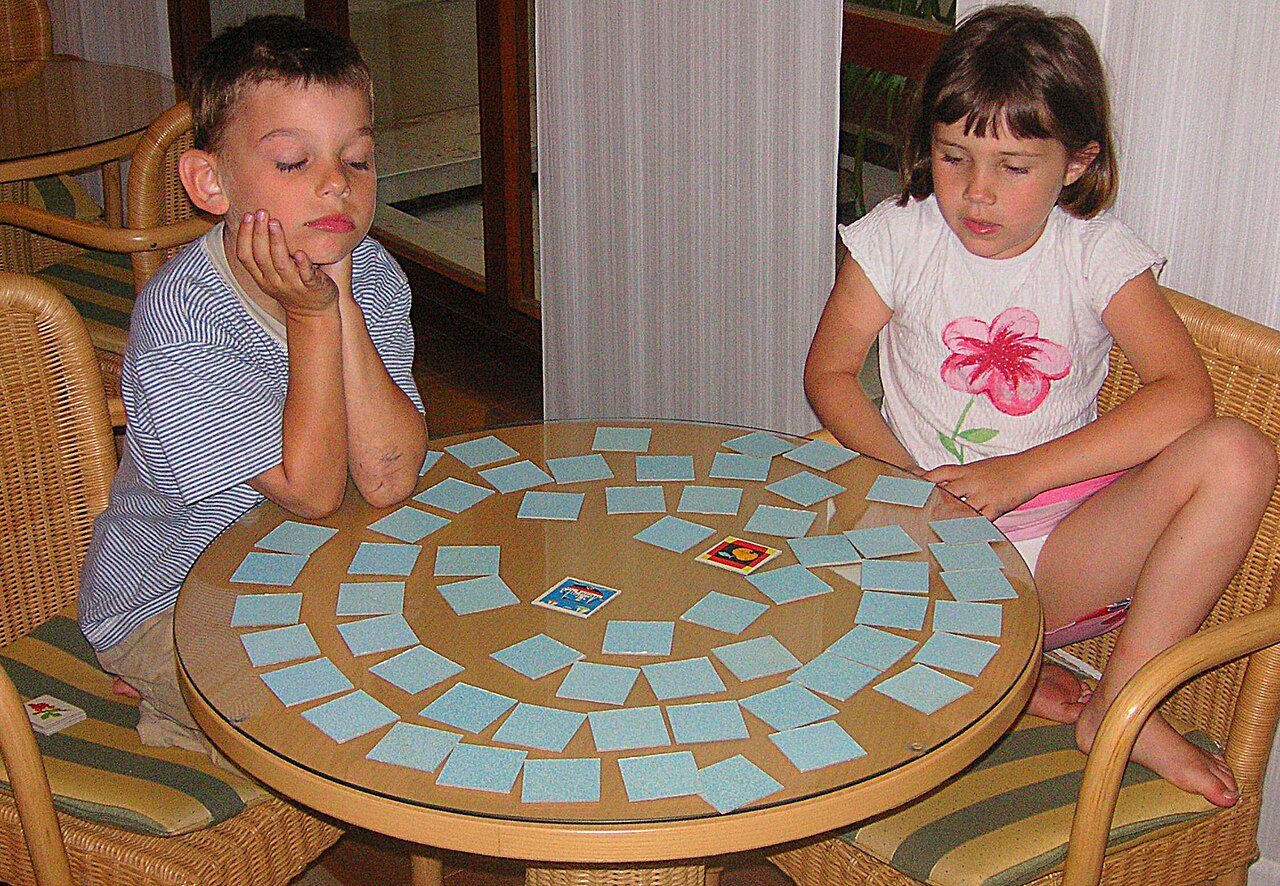
If you packed a pack of cards, you have a whole evening of games. Snap, Go Fish and Memory are perfect for young children. Rummy and Uno are better for older children. A pack of cards is the single best thing to pack for a hotel stay: it weighs nothing, takes no space, and turns an empty evening into a game night. If you forgot the cards, ask at reception, as many hotels keep a pack behind the desk.
10. Shadow Puppets
Turn off the main light, switch on the bedside lamp, and make animals with your hands on the wall. A dog, a bird, a rabbit, a snake. Then make up a story with the shadows. It is the oldest game in the world, and it still works, because children love the magic of a shadow becoming an animal. It is also wonderfully quiet, which the neighbours will appreciate.
11. Guess the Sound
One person makes a sound, and the others guess what it is. A door closing, water pouring, a dog barking, a drum beating. It is a listening game, and it works well in a hotel room because the room is quiet. For a harder version, use sounds from the holiday: the sea, a seagull, a train, a market. The player who guesses correctly makes the next sound.
12. The Alphabet Game
Pick a category, animals or foods or places, and go through the alphabet. A for alligator, B for bear, C for cat. The first player who cannot think of a word loses, or the game simply continues until the alphabet is finished. It is a vocabulary game that needs nothing, and it works for any age if you choose the category carefully. Try it with countries, and even adults will struggle at Q and X.
13. Quiet Charades
Normal charades is too noisy for a hotel room, so play it silently. One person acts out a word or a film title without speaking, and the others guess. No shouting, no jumping, just acting. It is surprisingly hard, and surprisingly funny. Use easy words for young children, and harder ones for older children. The rule is simple: if you make a sound, you lose your turn.
14. Pillow Fort Story
Build a small fort with the pillows and blankets, then tell a story inside it. The fort is a cave, a castle, a spaceship, a secret hideout. The story can be as short or as long as the children want. It is not really a game, but it is the thing children remember most about a hotel stay, and it is quiet, which is a bonus.
15. Memory Tray
Put ten small objects from the room on the tray: a spoon, a key card, a pen, a coin, a hairbrush, a tea bag, a remote control, a soap, a sock, a book. Show the tray for thirty seconds, cover it with a towel, and ask the children what was there. It is the classic memory game, and it works perfectly in a hotel room because the objects are all already there. Start with five objects for young children and build up to fifteen.
What to Pack for Hotel Room Games
A little packing makes hotel room games much easier. The list is short, and everything on it weighs almost nothing.
A pack of cards is the most useful thing you can pack. It turns an empty evening into a game night, and it works for every age. Put it in your hand luggage, not in the suitcase, so it is available the moment you arrive.
A small notebook and two pens are almost as useful. Tic-tac-toe, hangman, dots and boxes, drawing games and story writing all need paper and pen. A notebook also gives children something to do on their own when the adults are busy.
A few small toys are worth packing for younger children: a small soft toy, a few toy cars, or a set of building blocks. They are not games in themselves, but they make the other games better. A soft toy becomes a character in the story chain. A toy car becomes a prize in the scavenger hunt.
A phone or tablet with a few games downloaded is a useful backup, but it should not be the first choice. Screen games are quiet and easy, but they do not bring the family together the way a spoken game does.
Finally, pack patience. Hotel rooms are small, children are tired, and games will go wrong. A game that fails is not a disaster: put it away, try another one, and remember that the point is to have fun together, not to win.
Hotel Room Games by Age
For ages three to five, keep it simple and physical: I Spy with colours, Shadow Puppets, the Alphabet Game with animals, and the Memory Tray with five objects. Young children need short games with clear rules and lots of praise. Keep each game to five minutes, and be ready to switch at any moment.
For ages six to nine, add words and thinking: Twenty Questions, Hangman, Dots and Boxes and the Hotel Room Scavenger Hunt. Children this age can follow rules, take turns and handle losing, and they love competition, so keep score and let them challenge each other.
For ages ten and up, use the harder games: Quiet Charades with film titles, the Alphabet Game with countries, Twenty Questions with historical figures, and a longer Story Chain. Older children also enjoy making games for the family, so let them invent a scavenger hunt or write the clues for a guessing game.
Keeping the Noise Down
Hotel rooms have thin walls, and the neighbours will hear you. That does not mean the children cannot have fun. It means choosing the right games and setting the right rules.
Start by explaining the rule: we play quietly in the hotel, because other people are sleeping. Children understand this rule when it is explained, especially if you frame it as a challenge: “Can we play this whole game in whispers?” turns quiet into a game of its own.
Choose quiet games for the evening. Paper games, card games, memory games and guessing games are all quiet. Save the noisy games, like charades with jumping, for the daytime, or play them outside. If a game starts getting loud, pause it and switch to a quieter one.
Use the bed as a playing surface. Sitting on the bed keeps the children in one place, and it stops them running around the room. A card game on the bed, a drawing game on the bed, a story told on the bed: the bed is the hotel room’s table, sofa and playground all in one.
Finally, respect the time. Most hotels expect quiet after ten in the evening. Plan the games for the early evening, and wind down with a story or a quiet game before bed.
For more game ideas that work on a screen, the full range of modes is explained in the guide to Baamboozle game modes, which is useful when the hotel has a television you can connect a laptop to. You can also find ready-made games on the official Baamboozle site, which is a good place to look when you need a game in a hurry.
Frequently Asked Questions
What are the best games for kids in a hotel room?
I Spy, Twenty Questions, Would You Rather and the Hotel Room Scavenger Hunt are the best places to start. They need no equipment, they are quiet, and they work in a small space. Add Hangman, Dots and Boxes and a pack of cards for a longer game.
What should I pack for hotel room games?
A pack of cards, a small notebook and two pens are the essentials. They weigh almost nothing and they cover most of the games in this guide. A few small toys help for younger children, and a phone or tablet with a few games downloaded is a useful backup.
How do I keep hotel room games quiet?
Choose quiet games: paper games, card games, memory games and guessing games. Explain the rule that we play quietly because other people are sleeping, and turn quiet into a challenge by playing in whispers. Use the bed as a playing surface, and plan games for the early evening.
What games work for toddlers in a hotel room?
I Spy with colours, Shadow Puppets, the Alphabet Game with animals, and the Memory Tray with five objects are ideal for ages three to five. Keep each game to five minutes, praise every attempt, and be ready to switch games at any moment.