
Memory is the skill every other subject depends on. A student who cannot remember what they just read cannot answer questions about it. A student who cannot remember a spelling pattern cannot use it in their writing. The good news is that memory is trainable, and the training can be a game. That is why memory games for kids in the classroom work so well: they build recall, focus and vocabulary at the same time, they need almost no preparation, and students actually ask to play them again.
Most of these games need nothing at all. No cards, no printing, no equipment. A few use a tray of objects or a set of word cards, but even those take two minutes to set up. They all work as quick warm-ups, as brain breaks between lessons, or as a full fifteen-minute activity when you need one. And because Baamboozle has a dedicated Memory mode, several of them can also be played on the big screen, which makes them easy to run with the whole class at once.
This guide gives you fifteen games, from the simplest tray game for five-year-olds to chain stories that challenge twelve-year-olds. Each one includes the rules, the age it suits best, and a tip for making it harder or easier.
Why Memory Games Work in the Classroom
Memory games work because they practise the exact skill that school demands: holding information in mind and using it a moment later. When a student plays a memory game, they are not just having fun. They are training their working memory, which is the mental workspace where reading, maths and problem-solving all happen.
The second reason they work is attention. A memory game forces students to pay attention, because they know they will be tested in a few seconds. A student who is daydreaming during a tray game will miss the missing object. That immediate feedback trains focus far more effectively than being told to concentrate.
The third reason is confidence. Memory games are fair in a way that many classroom activities are not. They do not reward the student who reads fastest or the one who already knows the most. They reward the student who was paying attention. Quieter students often shine at memory games, and that changes how the class sees them.
Finally, memory games are endlessly flexible. The same game can revise spelling words, science vocabulary, historical dates or times tables, just by changing what the students have to remember. That makes them one of the most useful tools a teacher has, because one format can serve every subject.
15 Memory Games for Kids in the Classroom
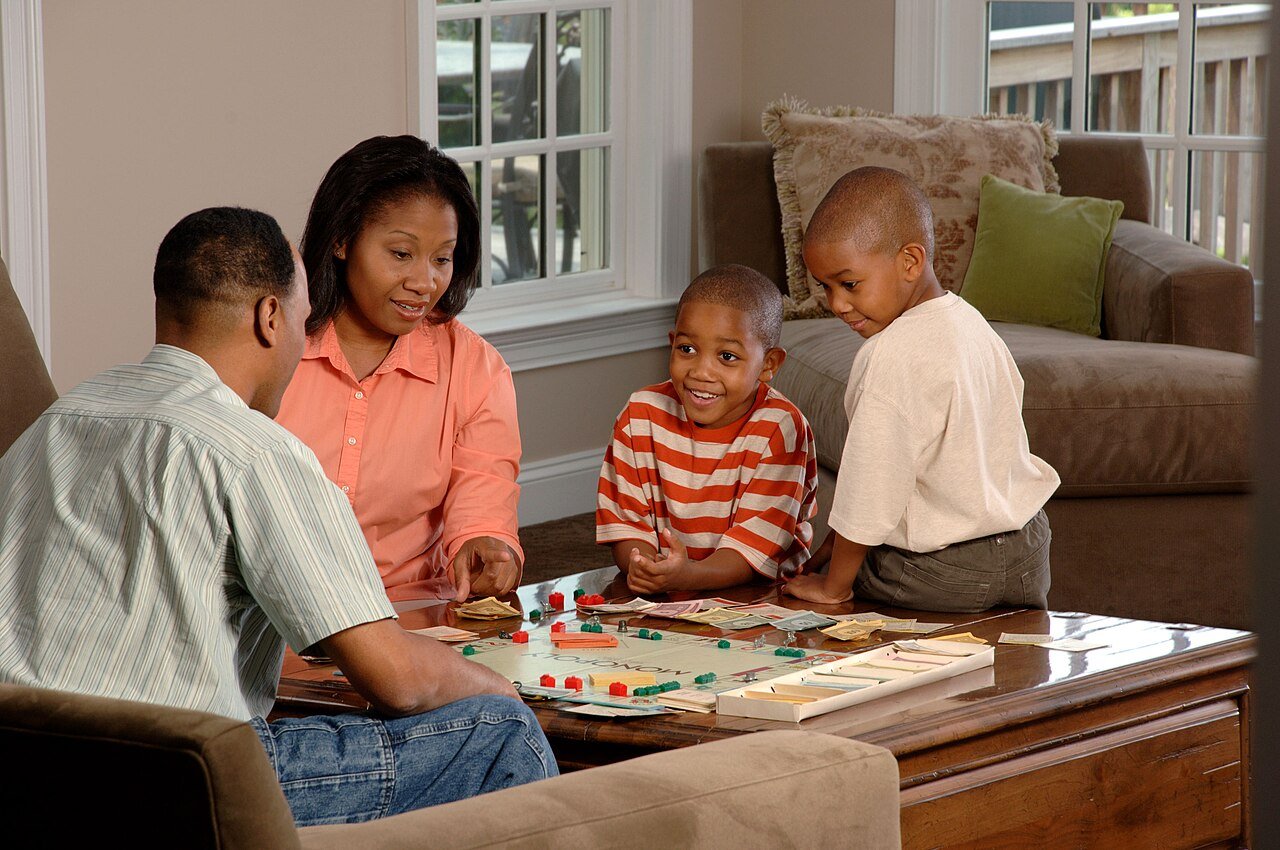
These fifteen games need almost no preparation. Start with the first few, and add the harder ones as your class gets better at remembering.
1. The Tray Game
The classic. Put ten objects on a tray, show it to the class for thirty seconds, cover it, and ask what was there. It sounds simple, and it is, but it is also the best memory game ever made. Start with five objects for young children and build up to fifteen. For a classroom version, put the objects on the screen as a Baamboozle tile instead of a real tray, and let teams write down what they remember.
2. What’s Missing?
Show a set of pictures or words, then remove one while the class closes their eyes. Which one is gone? It is easier than the tray game, because the students only have to spot one change, which makes it perfect for younger children or for the first game of the day. Make it harder by removing two objects, or by rearranging the rest at the same time.
3. Memory Match Pairs
The card game everyone knows: cards face down, turn two over, keep the pair if they match. On Baamboozle, the Memory mode does this on the screen, which makes it a whole-class game instead of a table game. Use picture pairs for young children and word-and-definition pairs for older ones. The pairs can be anything you are teaching: animals and their homes, words and their opposites, countries and their capitals.
4. Chain Story
One student starts a story with a sentence. The next student repeats it and adds a sentence. The next repeats both and adds another. The chain grows until someone forgets a link. It is hilarious, it builds listening skills, and it shows students exactly how memory works. Keep the stories short and silly, because funny sentences are easier to remember than boring ones.
5. I Went to Market
A classic chanting game. “I went to market and I bought apples.” The next student repeats the list and adds an item. “I went to market and I bought apples and bread.” The list grows until someone forgets. It works for any age, and you can theme it to your topic: market items for food, animals for science, or words starting with a letter for spelling.
6. Picture Pairs
Show a grid of pictures for thirty seconds, then hide it and ask questions. Which picture was in the top corner? What colour was the dog? How many birds were there? The questions force students to remember details, not just the general picture. It works well as a Baamboozle quiz, with one picture per tile and a question about it.
7. Word Pairs
Read out ten pairs of words: cat and hat, sun and fun, king and ring. Then read the first word of each pair and ask for the second. It is a gentle introduction to paired learning, and it builds the habit of linking new words to words students already know. For older students, use subject vocabulary: pairs like “photosynthesis and sunlight” or “numerator and denominator”.
8. Number Recall
Read out a string of numbers, one per second, and ask the class to repeat them back. Start with four numbers and build up. Then try it backwards, which is much harder and much more fun. Number recall is quick, it needs no materials, and it gives you an instant sense of which students can hold information in mind.
9. Sound Memory
Play a sequence of sounds: a clap, a tap, a snap, a whistle. Students repeat the sequence in order. Add one sound each round. It trains auditory memory, which is the kind of memory students use when they listen to instructions. It also works as a calming game, because the whole class has to be quiet to hear the sounds.
10. Action Memory
One student performs three actions: touch your nose, jump once, spin around. The next student repeats them and adds a fourth. Like the chain story, but with movement, which makes it perfect for restless classes. It is also a wonderful game for the end of the day, when students need to move and you need them to focus at the same time.
11. Story Recall
Read a short story aloud, then ask ten questions about it. Who was the main character? What did they lose? Where did the story take place? The questions should cover characters, places and events, not just one detail. It is reading comprehension disguised as a game, and it works because the students want to prove they were listening.
12. Rhyme Pairs
Say a word and ask the class to remember its rhyming partner from a list you showed earlier. Cat and hat, light and night, cake and snake. It builds phonemic awareness, which is the foundation of reading and spelling. For older students, use harder rhymes or near-rhymes, and let them explain why two words do or do not rhyme.
13. Category Sprint
Name a category, and the class has one minute to remember as many items in it as they can. Animals, countries, foods, verbs. Then ask them to recall the list without looking. It trains both memory and organisation, because students who group the items into smaller sets will remember far more than students who try to memorise a random list.
14. Backwards Story
Tell a short story, then ask the class to retell it backwards, starting from the end. It sounds impossible, and it nearly is, which is why students love it. It forces deep attention, because you cannot retell a story backwards unless you really understood it. Start with very short stories of three or four events.
15. Memory Bingo
A bingo card where each square is something to remember: a word, a picture, a number. The teacher calls out clues, and students mark the square that matches. It combines memory with luck, which keeps everyone engaged, and it works beautifully as a review game at the end of a unit. The first student to complete a line wins, but everyone has practised remembering.
How to Run Memory Games on Baamboozle
Several of these games work brilliantly on Baamboozle, and the setup is simple. The platform has a dedicated Memory mode, which turns any quiz into a matching-pairs game on the big screen. That is the natural home for Memory Match Pairs and Picture Pairs.
To build a memory game, create a quiz with pairs as the answers. For a word-and-definition game, each tile shows a word, and the matching tile shows its definition. For a picture game, each tile shows an image. The class plays in teams, taking turns to find pairs, and the team with the most pairs wins. The full range of modes, including Memory, is explained in the guide to Baamboozle game modes, which is worth reading before you build your first one.
For games that do not need the screen, like the Tray Game or the Chain Story, Baamboozle still helps. Build a quiz with the objects or the story elements as tiles, and use it to check answers at the end. The screen gives the game a structure: everyone can see the list, everyone knows whose turn it is, and the score keeps the energy up.
Keep the groups small. Memory games work best in teams of three or four, because every student gets a turn. In a team of eight, half the students will never touch a card. If your class is large, split it into several small teams and run the same game twice, or let teams play against each other in a quick tournament.
Time the games. Five to ten minutes is right for most memory games. The Tray Game takes three minutes. The Chain Story can take ten. A Memory Match tournament can fill fifteen. If a game runs longer, the memory load becomes unfair: the students who played first have forgotten by the end.
Memory Games by Age Group
For ages five to seven, keep it visual and short. The Tray Game, What’s Missing and Picture Pairs are ideal. Use five to eight objects, show them for a full thirty seconds, and celebrate every correct answer. Young children need success to stay engaged, so make the first rounds easy and build up slowly.
For ages eight to ten, add words and numbers. Word Pairs, Number Recall, I Went to Market and Memory Match with word pairs all work well. Students this age can hold more in mind, so raise the difficulty: ten objects instead of five, longer chains, faster rounds. They also love competition, so keep score and let teams challenge each other.
For ages eleven and up, use the harder games. Backwards Story, Category Sprint and Story Recall all demand real concentration, and older students enjoy the challenge. Let them design their own memory games for the class, because building a game that is hard but fair takes more thinking than playing one. A student-made memory game is often the best game of the week.
Tips for Making Memory Games Harder or Easier
Difficulty is easy to adjust once you know the levers. The first lever is the number of items. Five objects is easy, fifteen is hard. Change the count and you change the game without changing the rules.
The second lever is time. Thirty seconds to look is generous. Ten seconds is hard. Five seconds is very hard. Shorten the viewing time and the same game becomes a new challenge.
The third lever is interference. Asking a question, telling a joke or playing a sound between showing and recalling makes the game much harder, because the new information pushes the old information out. Use interference sparingly, because it can frustrate younger students, but for older students it is the best way to raise the difficulty.
The fourth lever is the type of memory. Remembering pictures is easier than remembering words, and remembering words is easier than remembering numbers. Start with pictures, move to words, and save numbers for the hardest rounds.
The fifth lever is teamwork. Letting a team discuss answers makes the game easier, because the group remembers more than any single student. Playing solo makes it harder. Use team play to introduce a game, then switch to solo play when the class is ready for a challenge. You can find more ideas for running team games on the official Baamboozle site, including ready-made memory games from other teachers.
Finally, always end with success. The last round should be one the class can win. A game that ends in failure leaves students feeling bad about their memory, which is the opposite of what you want. Memory improves with practice, and students who feel good about their memory will practise more.
Frequently Asked Questions
What are the best memory games for kids in the classroom?
The Tray Game, What’s Missing, Memory Match Pairs and the Chain Story are the best places to start. They need no preparation, they work for a wide range of ages, and they build the exact recall skills that reading and maths depend on. Add Number Recall and Story Recall when the class is ready for more.
How do memory games help students learn?
They train working memory, which is the mental workspace where reading, maths and problem-solving happen. They also train attention, because students know they will be tested in seconds. And they build confidence, because they reward paying attention rather than already knowing the most.
Can I play memory games on Baamboozle?
Yes. The platform has a dedicated Memory mode that turns a quiz into a matching-pairs game on the big screen. Build a quiz with word pairs, picture pairs or definition pairs, switch on Memory mode, and let teams take turns finding matches. Classic quiz mode also works for games like the Tray Game and Story Recall.
How long should a classroom memory game last?
Five to ten minutes is ideal. The Tray Game takes about three minutes, the Chain Story about ten, and a Memory Match tournament about fifteen. Short games played often build memory far better than one long session, because the skill grows with regular practice.